
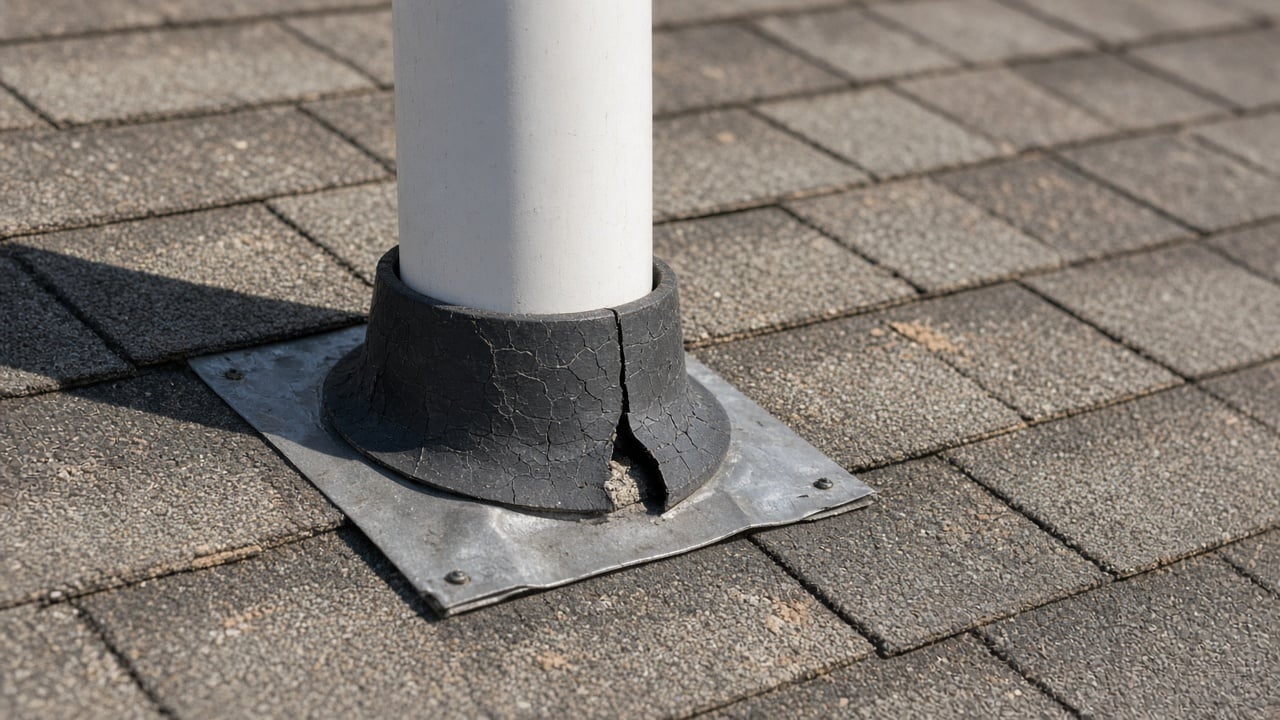
A pipe boot is the rubber or metal collar that seals the gap where a plumbing vent pipe comes up through your roof. When that collar dries out and cracks, rain can run down the pipe and into the attic, and the first sign is often a small ceiling stain near a bathroom or kitchen. In most cases the fix is a new boot set correctly into the shingles, not a new roof and not a tube of caulk.
What does a pipe boot actually do?
Most houses have plumbing vent pipes that run up through the roof so drains can breathe. The roof deck has a hole cut around each one, and the boot is what keeps water out of that hole. Most boots have a flat metal or plastic base, called a flange, and a flexible collar that hugs the pipe.
The Asphalt Roofing Manufacturers Association’s residential manual describes how the flange should sit: flat on the roof, with its lower edge lying on top of the shingles below and the side and upper shingles lapping over it. That layering is what makes it work. Water running down the roof passes over the flange instead of getting under it. The same manual says the boot should be checked for cracks once a year.
Why do pipe boots crack so often in Central Texas?
The rubber collar is the weak point, and it sits in full sun all year. The National Weather Service Austin climate summary notes that normal highs reach 90 degrees by late May and stay above 90 until late September, with sunshine near 75 percent of the time in summer. Months of heat and direct sun dry out rubber, and once it gets stiff, it pulls away from the pipe or splits.
The same NWS summary says severe weather here most often comes as large hail and strong winds. Hail can dent a metal base or tear a collar that was already brittle. Wind-driven rain then finds the opening sideways, which is why some boot leaks show up only in certain storms.
How can you tell a pipe boot is leaking?
Look for these clues before you assume the worst:
- A ceiling stain near a bathroom, laundry room or kitchen, where vent pipes usually run.
- A stain that grows only in heavy or wind-driven rain and stays dry in light showers.
- In the attic, a dark ring on the underside of the roof deck around a pipe, or a drip line running down the pipe itself.
- From the ground with binoculars, a collar that looks gray, cracked or split, or a gap between the collar and the pipe.
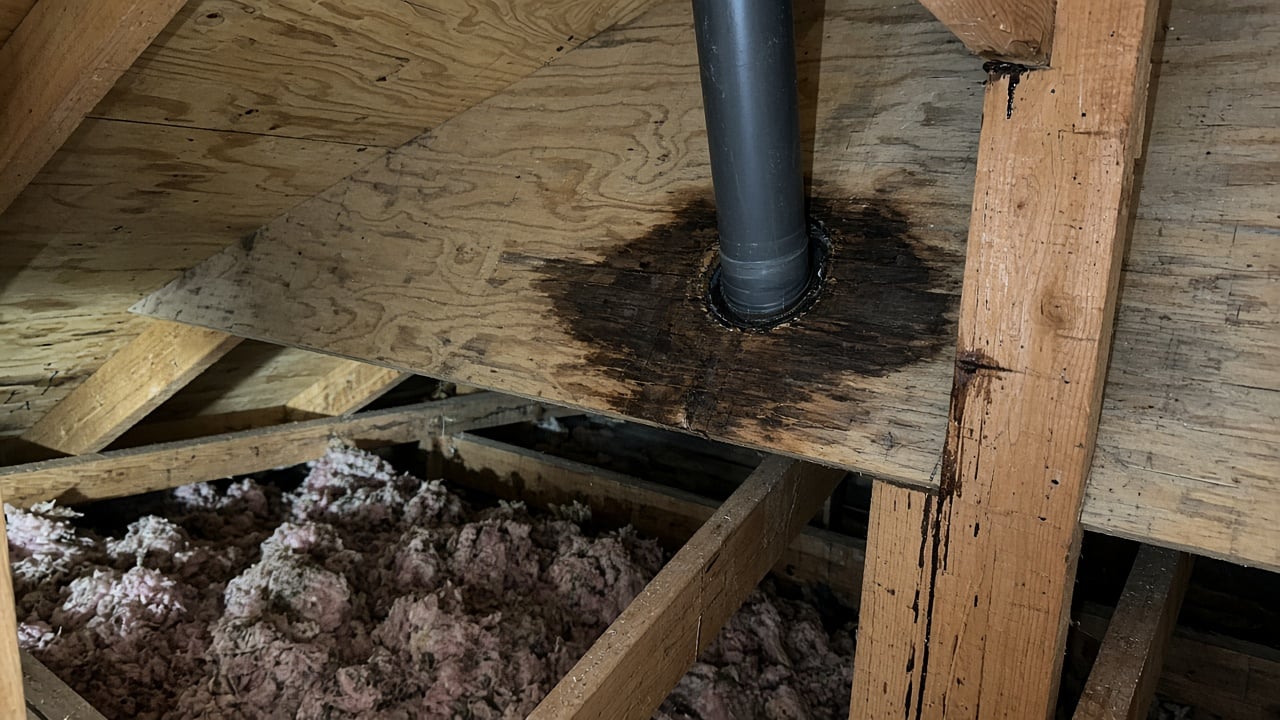
Water travels before it drips, so the stain on your ceiling is not always right under the pipe. Checking the attic with a flashlight on a dry day often tells you more than the ceiling does. Our roof repair page explains how leaks get traced back to where water actually enters.
Is caulk or a slip-on collar enough?
Caulk can slow a leak for a while, but it is a patch on a part that has already failed. Sealant bakes in the same sun that cracked the boot. Slip-on repair sleeves that fit over a worn collar are sold as a stopgap, and they can buy time when the base is still flat, tight and sealed under the shingles.
A lasting repair usually means replacing the boot. The shingles above the pipe are lifted, the old boot comes out, and a new one goes in so the lower flange sits over the course below and the upper shingles lap over the top. Shingle maker Malarkey’s pipe flashing detail calls for a storm collar or sealant at the pipe and for sealing the shingles that overlap the flange. The Canadian Roofing Contractors Association’s guidance adds a useful detail: leave a small gap between the cut shingles and the collar so grit can wash away instead of piling up and pushing water under the shingles.
Does replacing a pipe boot need a permit in Austin?
The City of Austin’s work exempt from building permits page does not mention pipe boots by name. It does exempt asphalt shingles that replace existing asphalt shingles, unless the home is in the Wildland-Urban Interface area and 50 percent or more of the roofing is being replaced. It also exempts roof decking repairs up to 128 square feet.
The plumbing section draws a line worth knowing. Stopping a leak in a vent pipe is exempt, but if the vent pipe itself is defective and has to be removed and replaced with new material, a permit and inspection are required. Exempt work still has to meet code. If your job goes beyond a boot on a sound pipe, check with Austin Development Services first.
When you may not need a contractor
You may be able to handle it yourself if:
- You only want to check. Binoculars from the yard and a flashlight in the attic will tell you a lot.
- The stain is old, the attic is dry after several hard rains, and the boot looks intact.
- The roof is low and walkable, you are comfortable on it, and you are following the boot maker’s instructions.
Call a roofer when the roof is steep or two stories, the deck around the pipe feels soft, shingles around the boot are brittle and crack when lifted, several boots are failing at once, or the leak keeps coming back after a patch. Those signs point past one collar. A roof inspection can tell you whether you need one new boot or have a bigger problem with the roof.
Seeing a small stain near a vent pipe?
Ridgepoint Solutions handles residential roofing repairs for homes in Austin and surrounding Central Texas communities, including pipe boots, flashing and the leaks they cause. Get a free estimate for a look at the roof and attic, or email info@ridgepoint-solutions.com with a photo of the stain and, if you can get one safely, a photo of the vent pipe from the ground.
Frequently asked questions
How often should a roof pipe boot be checked?
The Asphalt Roofing Manufacturers Association’s residential manual recommends checking pipe boots for cracks once a year. In Central Texas, a good time is after the long summer heat, since sun and high temperatures are what dry out rubber collars. Also look after any hailstorm or strong wind event, and from the attic after the first heavy rain of the season.
Can a cracked pipe boot cause a leak far from the pipe?
Yes. Water that gets past a cracked collar often runs along the pipe, the roof deck or a rafter before it drips, so the ceiling stain can appear a few feet away. That is why it helps to check the attic on a dry day with a flashlight. Look for a dark ring on the deck around the pipe or a drip line down the pipe.
Should a leaking pipe boot be caulked or replaced?
Caulk or a slip-on sleeve can work as a short-term patch when the base is still flat and sealed under the shingles. A lasting fix is a new boot set into the shingles so the lower flange laps over the course below and the shingles above lap over it. Replace the part, then seal it the way the boot maker’s instructions call for.