
Soft or swollen wood siding usually means water has been sitting against the boards longer than the paint film can handle. On many homes in Austin and surrounding Central Texas communities, a small patch of boards can be cut out and replaced if the sheathing behind them is still sound. When the soft spots run along the bottom course, around windows, or under a roof-to-wall joint, you are past a one-board fix and into a wall repair that needs a weather-resistive barrier and flashing put back correctly.
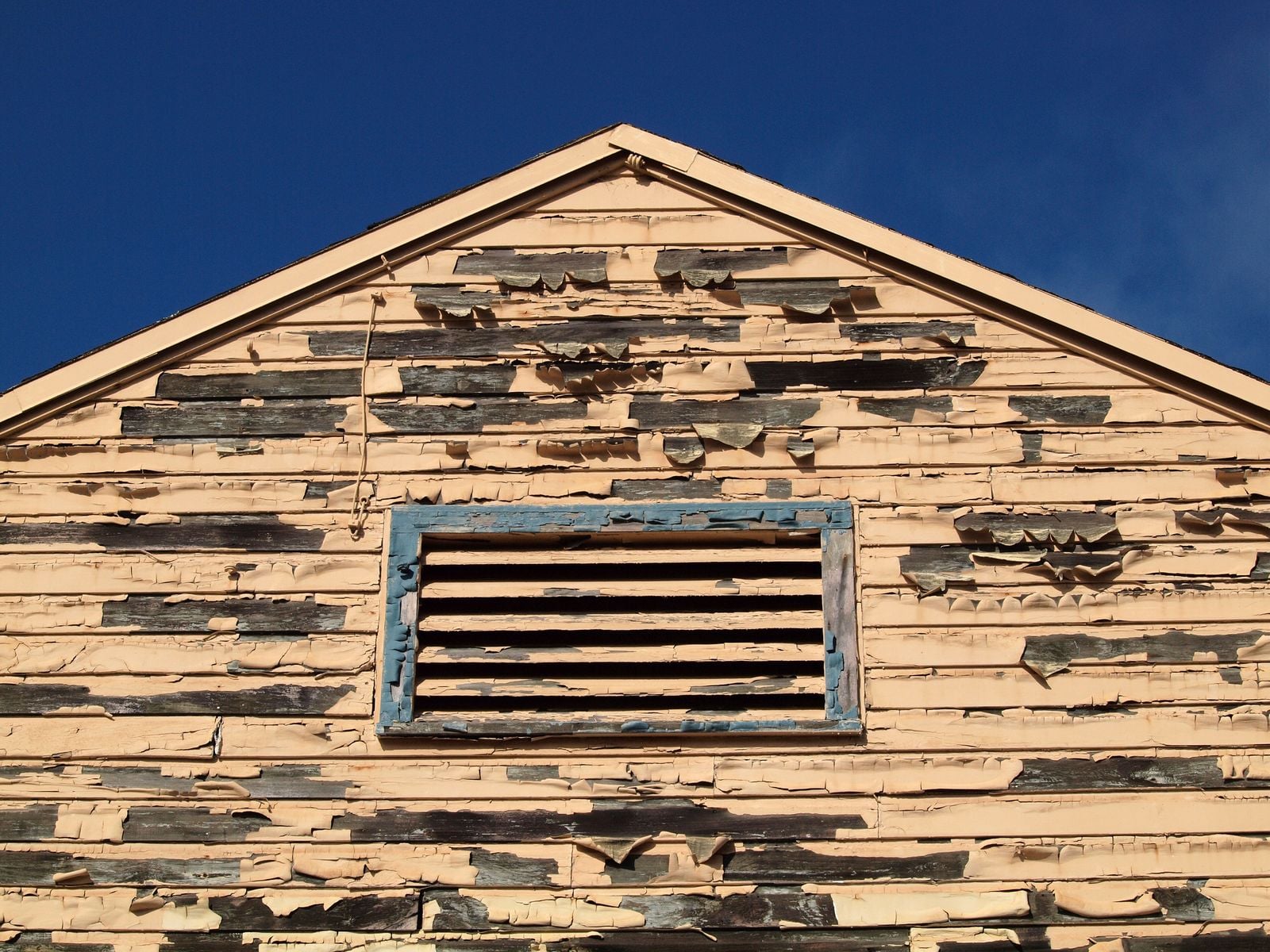
Why does wood siding rot so often here?
Central Texas is humid subtropical. The National Weather Service Austin climate summary puts yearly rainfall around the mid-30s of inches, with May, October and June as the wettest months. South and southeast winds also pull Gulf moisture inland, and the same summary notes that low clouds, fog and drizzle often form overnight when those winds are in place.
That pattern matters for wood. Boards near grade get soaked by splash from rain, then dry in the summer heat. Boards under a drip edge or a missing kickout stay damp after every storm. Paint can hide the damage for a while, but the wood under it softens once it stays wet. Fiber-cement and other non-wood products do not rot the same way, but the wall under them still needs drainage and flashing, so a soft spot at a bottom edge is still worth investigating.
How can you tell surface wear from real rot?
Walk the walls after a dry spell and look for:
- Boards that feel spongy when you press with a screwdriver tip (do not dig holes; a light press is enough).
- Edges that are swollen, cupped or pulling away from the wall.
- Paint that bubbles or peels in a patch while the rest of the wall holds.
- Dark staining that starts at the bottom course, a window sill or a roof-to-wall step and climbs upward.
- Soil, mulch or a patio that sits tight against the lower edge of the siding.
Peeling paint alone is not proof of rot. Soft wood, swelling and staining that follows water paths are. If you only see faded color on sound boards, prep and paint may be enough. If the board compresses, plan on replacing that piece and checking what is behind it.

What should be checked under the siding?
The Texas Department of Insurance’s storm-repair guidance for exterior siding says the contractor should check the wall sheathing and replace deteriorated or damaged areas before new siding goes on. The same page says a weather-resistant layer — asphalt felt or another approved weather-resistant material — is typically applied to the wall before most siding products, following the siding maker’s fastening and material rules.
That is the part homeowners miss. A board swap that leaves wet, soft sheathing or a torn barrier in place only buys time. Flashing at windows, doors and roof-to-wall joints has to shed water out over the face of the siding, not behind it. Our siding page covers how those hidden layers do most of the weather work.
Major siding makers publish clearance rules for the same reason. James Hardie’s HardiePlank quick-start clearances call for a minimum of 6 inches from finished grade in the U.S., 2 inches from slabs, paths and steps, and a small gap above horizontal flashing that is not sealed shut with caulk. Their installation notes also call for a water-resistive barrier and for grade that slopes away from the building — typically at least 6 inches in the first 10 feet — and warn against leaving the product in contact with standing water. Even if your house uses a different product, those clearances are a useful checklist for why bottom-course rot keeps coming back.
Does a siding repair need a permit in Austin?
For one- and two-family homes and townhouses not more than three stories, the City of Austin’s work exempt from building permits page lists siding that does not exceed 128 square feet and is not part of a fire-resistance-rated assembly. Repairing or replacing exterior trim — fascia, trim and soffits — is listed separately and has no square-foot limit on that page. Exempt work still has to meet the applicable codes and ordinances.
When the job goes past that 128-square-foot line, Austin’s Residential Express (Minor Repairs) permit covers adding or removing siding in excess of 128 square feet on a single-family, duplex or two-family house lot. Most Express permits are issued in about one business day, though floodplain or historic-district properties can take longer. If the scope grows beyond what Express allows, the City requires a different residential building permit application.
Measure the area you plan to open before you start. A few failed boards on one wall often stay under the exemption. A full elevation, or several walls after a long leak, usually does not. When in doubt, ask Austin Development Services before you cut.
When you may not need a contractor
You may be able to handle it yourself if:
- You are only checking: pressing soft spots, photographing staining, and measuring how many square feet look bad.
- The problem is loose caulk at a joint, and the boards around it are still hard and dry.
- You are replacing a couple of matched boards on a low, walkable wall, you can protect the weather barrier, and you will follow the siding maker’s fastening instructions.
Call a contractor when boards feel soft over a long run, the sheathing behind them looks dark or crumbly, you cannot match the product, the wall is two stories or hard to reach, water stains show up inside, or the soft area sits under a roof-to-wall joint or a clogged gutter. Those jobs need the barrier and flashing rebuilt, not just a board set in place.
Soft boards on the bottom course?
Ridgepoint Solutions handles siding repair and replacement for homes in Austin and surrounding Central Texas communities, including small board swaps and larger wall sections when the sheathing and weather barrier need work. Get a free estimate for a look at the wall, or email info@ridgepoint-solutions.com with photos of the soft area and the nearest window or roof edge.
Frequently asked questions
Can you replace just a few rotten siding boards?
Often yes, if the rest of the wall is sound and you can match the profile and thickness. Cut back to solid wood, check the sheathing and weather-resistive barrier, and fasten the new boards the way the product instructions require. If soft spots keep showing up along the bottom course or under a roof edge, treat it as a drainage problem, not a one-board problem.
How many square feet of siding can I replace in Austin without a permit?
On the City of Austin’s work-exempt list for one- and two-family homes, siding that does not exceed 128 square feet and is not part of a fire-resistance-rated assembly does not need a building permit. Exterior trim repairs are listed separately. Exempt work must still meet code. Past 128 square feet, Residential Express typically covers adding or removing siding on those house types.
Why does siding keep rotting near the ground?
Splash from rain, soil or mulch piled against the wall, and grade that slopes toward the house keep the bottom course wet. Manufacturer clearance guides for fiber-cement products commonly call for several inches of space above finished grade and a gap above horizontal flashing so water can leave the wall. Fix the drainage path when you replace the boards, or the next set will soften in the same place.