
When a gutter spills over the front, you see it. When water runs behind the gutter, you usually don’t, and that hidden water is what rots the fascia board the gutter hangs on. If you see drips between the gutter and the house, streaks on the trim, or peeling paint along the roof edge, check the fascia before you replace or clean anything else. Here is how that rot starts, how to check for it, and the order that makes a repair last.
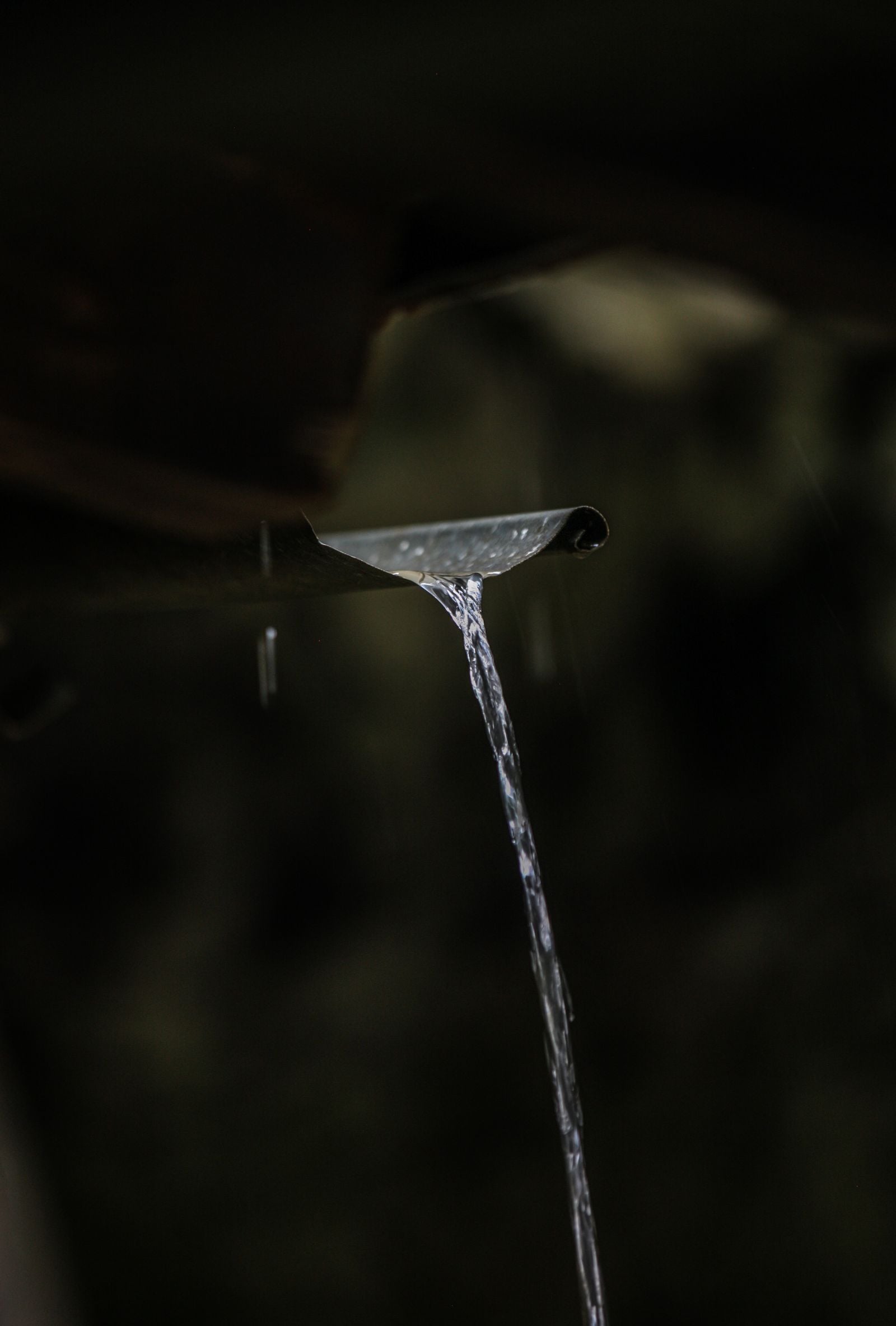
Why does water get behind a gutter at all?
A gutter is meant to catch water that drips off the roof edge. That only works if the water lands inside the trough. Three things usually send it behind instead:
- A missing or short drip edge. Drip edge is the bent metal strip along the bottom of the roof. It kicks water out past the fascia and into the gutter. Without it, water can follow the underside of the roof deck and run straight down the face of the fascia.
- A gutter hung too low or with a gap. If the back of the gutter sits below the line where water drips, or stands off the board, water slips into the gap.
- Overflow at one spot. A sag, a loose hanger, a clog at the outlet or an inside corner where a roof valley dumps a lot of water can push water over the back edge instead of the front.
The National Weather Service Austin climate summary notes that rainfall here has topped five inches in several hours, with May, October and June as the wettest months. Short, heavy storms are exactly when a small gap at the roof edge turns into a steady stream down the wood.
What does the building code say about drip edge?
The City of Austin’s building technical codes list the 2024 International Residential Code, with local amendments effective July 10, 2025. Section R905.2.8.5 of that code calls for drip edge at the eaves and rake edges of shingle roofs. It must reach at least 1/4 inch below the roof sheathing and extend at least 2 inches back onto the roof deck. At the eaves, the underlayment laps over the drip edge.
Not every roof has it, especially older ones, and on some roofs the drip edge was bent, cut short or blocked by a gutter hung in the wrong place. You don’t need a code book to check yours. From a ladder, look for a metal lip that sticks out past the face of the fascia and drops into the gutter. If you see shingles hanging over bare wood with no metal, that is a likely source of the problem.
How do you tell if the fascia is already rotting?
Fascia rot starts at the places that stay wet longest: the low end of a run, next to downspouts, at inside corners and at joints between boards. Signs to look for:
- Paint that blisters or peels in a band right behind the gutter
- Dark streaks or stains running down the board or onto the soffit
- Gutter spikes or screws that have backed out, or a gutter that pulls away from the house
- Small holes where birds, wasps or squirrels have found soft wood
The simplest test is a screwdriver. Press the tip into the board at the low points. Sound wood resists. Rotted wood feels soft or spongy, or the tip sinks in. Then check the soffit below and, if you can get into the attic safely, the ends of the rafters and the edge of the roof deck. Water that ran behind the gutter for years often reaches them too.
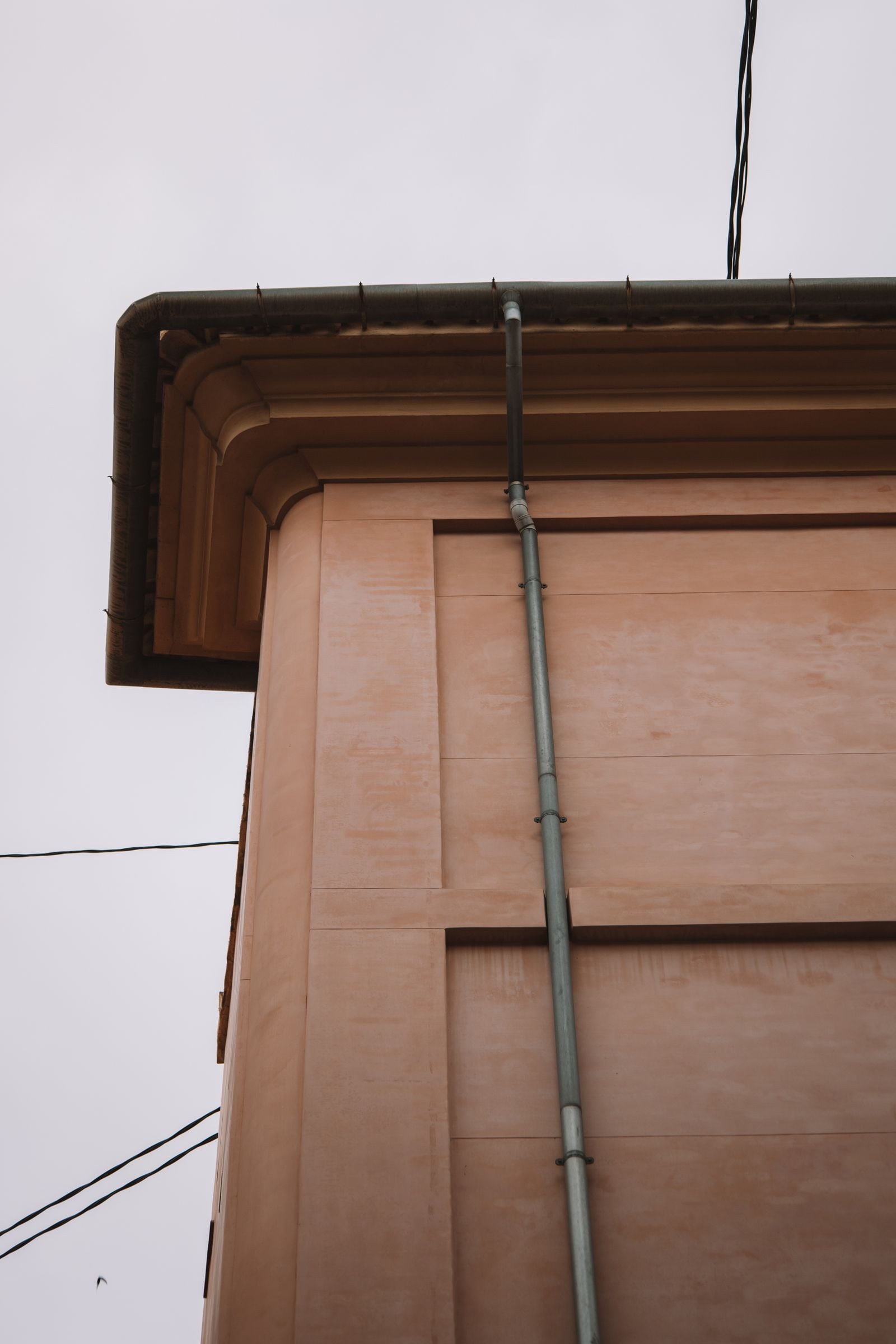
What is the right repair order?
Replacing the board and putting the old gutter back the old way just starts the clock again. A repair that lasts follows the water:
- Fix the roof edge first. Add or correct the drip edge so water clears the fascia. If the edge of the roof deck is soft, that gets repaired at the same time. The roof repair page covers flashing and drip edge in more detail.
- Replace the rotted fascia. Cut back to solid wood and check what the fascia is nailed to. Prime and paint all sides of the new board, including cut ends, before it goes up.
- Rehang the gutter correctly. Set it so the back sits under the drip edge, slope it toward the outlet, and fasten the hangers into sound wood.
- Find the cause of any overflow. Clear outlets, fix sags and add a downspout where a long run or valley keeps overflowing.
The City of Austin’s list of work exempt from building permits includes repairing or replacing exterior trim such as wood fascia, trim and soffits, and roof decking up to 128 square feet. Exempt work must still meet the building codes. Gutters themselves are not named on that list, so ask Austin Development Services if your project goes beyond a simple repair.
Older homes: If the house was built before 1978, the paint on the fascia may contain lead. The EPA’s Renovation, Repair and Painting program applies to paid work that disturbs paint in pre-1978 housing. Its minor-repair exception covers 20 square feet or less of exterior paint, but EPA notes that demolition of painted surfaces is covered no matter the size. If the old fascia is painted, ask whoever does the work how they will handle it lead-safe.
When can you handle it yourself?
Not every streak means rot. You can often handle these yourself if you can work safely from a ladder on a one-story roofline:
- Clearing a clogged outlet or a corner packed with leaves
- Tightening a loose hanger into wood that is still firm
- Adding a downspout extension so water lands away from the house
Call a contractor when the screwdriver sinks in, when more than one board is soft, when the drip edge is missing, when the roof is two stories or steep, or when the house is older and the paint may contain lead. At that point the fix involves the roof edge, the trim and the gutter together, and doing them in the right order matters more than any single part.
Planning a fascia or gutter repair?
Ridgepoint Solutions repairs fascia, roof edges and gutters for homeowners in Austin and surrounding Central Texas communities. We look at where the water is actually going, explain what we find, and give you a written scope before any work starts. Get a free estimate, or email info@ridgepoint-solutions.com with photos of the roof edge.
Frequently asked questions
Why is my gutter overflowing in one spot even though it is clean?
One-spot overflow usually comes from a sag where a hanger has loosened, a seam or corner that collects water, or a roof valley that sends more water to one place than the gutter can take. It can also mean the run slopes away from the downspout. Watch the gutter during a rain or run a hose on the roof, and note exactly where the water spills. That spot tells you whether to re-hang, add an outlet or check the roof edge above it.
Can I just put a new gutter on the old fascia?
Only if the board is sound. Gutter hangers need solid wood to hold, and a new gutter on soft fascia will pull loose and keep feeding water into the rot. Probe the board along the whole run, especially at corners and downspouts. If any section is soft, replace that fascia first, fix the drip edge so water clears the board, and then hang the new gutter. Doing it in that order avoids paying for the same repair twice.
Does replacing fascia need a permit in the City of Austin?
The City of Austin lists repairing or replacing exterior trim, including wood fascia, trim and soffits, as work exempt from a building permit for homes. The work still has to meet the building codes. If the job grows into more than 128 square feet of roof decking, a roof replacement or other structural repair, check with Austin Development Services before work begins. Rules can change, so confirm on the City’s current page.