
A flat roof with drains and a parapet around it needs two ways to shed water: the primary drains that handle normal rain, and a secondary (emergency overflow) path that takes over when those drains clog or can’t keep up. The building code requires that backup on roofs where a parapet would otherwise trap water. When water can’t leave a roof with a wall around it, it piles up, and standing water is heavy. If you own or manage a low-slope building, knowing where your overflow drains or scuppers are, and keeping them clear, is a simple way to protect the roof and the building under it.
Here is how the two systems work, what the code says about them, and what to check before the next big storm.
What is the difference between a primary drain and an overflow drain?
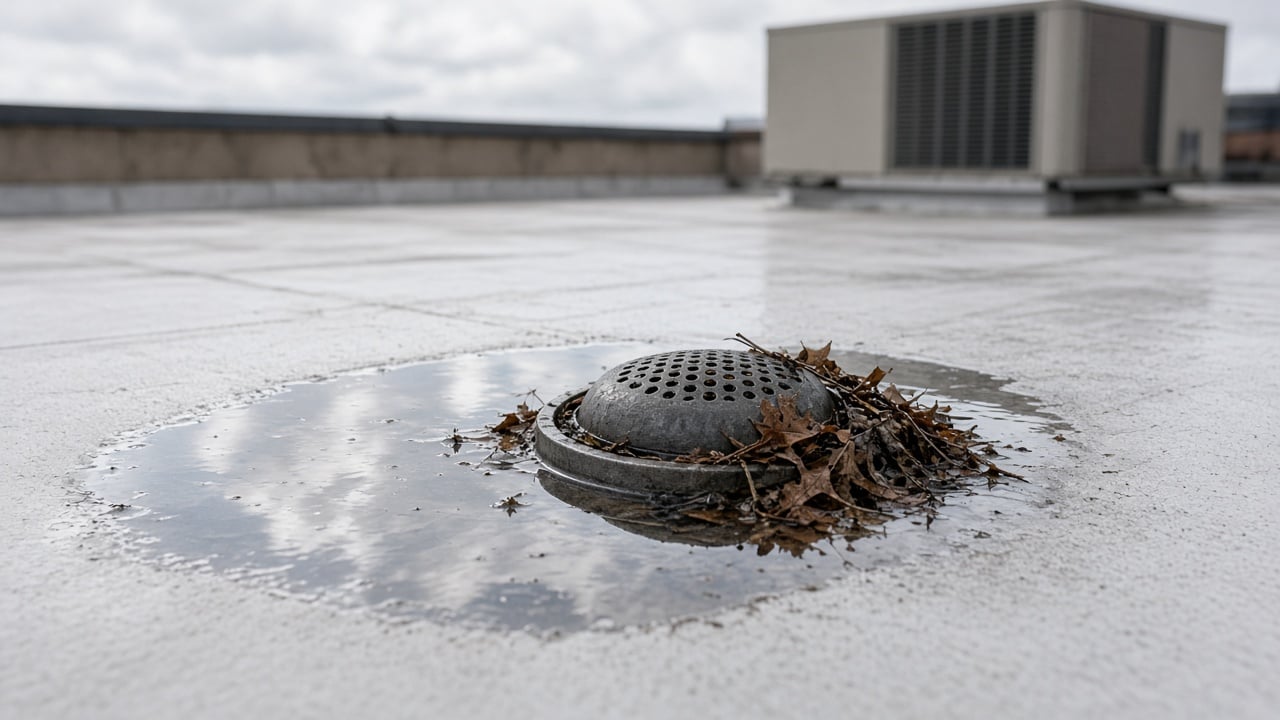
The primary system is what you see working on an ordinary rainy day. On most flat commercial roofs that means interior roof drains with a strainer dome, set at the low points of the roof, or scuppers and gutters at the roof edge.
The secondary system is the backup. It is usually one of two things:
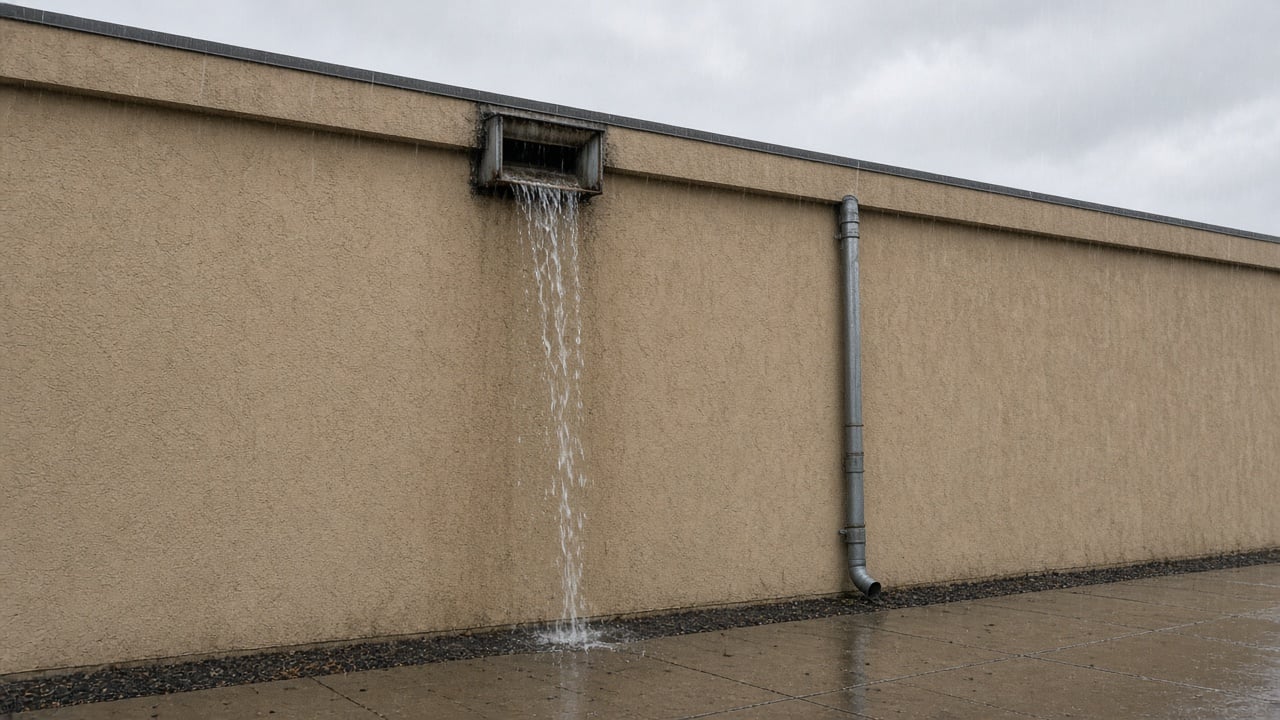
- Overflow scuppers. Openings through the parapet wall, set a little above the roof surface, that spill water over the side of the building once it rises to their level.
- Secondary roof drains. A second set of drains, set slightly higher than the primary drains, often right next to them, piped separately.
If a pair of drains sits side by side and one sits a bit higher, the higher one is usually the overflow. It should stay dry most of the year. If it runs often, your primary drains are telling you something.
What does the building code require in Austin?
The City of Austin’s Building Technical Codes page shows the City has adopted the 2024 International Building Code (IBC), with local amendments effective July 10, 2025, and the 2024 Uniform Plumbing Code (UPC), effective September 1, 2026.
Section 1502 of the 2024 IBC says that where roof drains are required, secondary (emergency overflow) roof drains or scuppers must be provided where the roof perimeter extends above the roof in a way that would trap water if the primary drains back up for any reason. Sizing and installation follow the structural rain-load section of the IBC and the plumbing code.
The plumbing code’s secondary drainage rules add the details most owners will recognize on a roof:
- Overflow scuppers must be at least 4 inches high.
- Secondary roof drains must sit at least 2 inches above the roof surface, so they only take water once it has started to pond.
- If the secondary drains run on their own piping, that piping must discharge above grade, somewhere building occupants or maintenance staff can see it.
That last rule is the useful one for a building owner. Water coming out of an overflow outlet is a visible signal that the primary drains aren’t doing their job.
Why does this matter so much in Central Texas?
The National Weather Service office for Austin and San Antonio notes on its FloodAware training page that South Central Texas is commonly referred to as Flash Flood Alley. Heavy rain here can arrive fast. A roof drain partly blocked by leaves, a lost strainer dome, a plastic bag or a pile of gravel can handle a light shower and still fail in a downpour.
On a roof surrounded by a parapet, the water that can’t get out stays on the roof. The IBC’s structural rain-load rule assumes exactly that case: each part of the roof has to be designed for the water that collects if the primary drains are blocked, up to the level where the secondary system starts flowing. That design only holds if the overflow path is open. A scupper packed with debris, or an overflow drain that was roofed over during a past repair, takes away the margin the building was designed around.
Who is responsible for keeping roof drains clear?
Keeping them clear is part of maintaining the building. The City has also adopted the 2024 International Property Maintenance Code, and Section 304.7 says roof drainage must be adequate to prevent dampness or deterioration in the walls or interior, and that roof drains, gutters and downspouts must be maintained in good repair and free from obstructions.
In practice that means someone should walk the roof on a schedule and after major storms. Our commercial roof maintenance page lists what a routine visit covers, including drains and scuppers.
What should I check on my own roof?
You don’t need a contractor to do a basic drainage check, as long as you can get on the roof safely. Go on a dry day, a day or two after rain:
- Find every drain and scupper. Make a simple sketch so the next person knows where they are, including the overflow ones.
- Look at the strainers. Each interior drain should have its dome in place and clear of leaves, sediment and trash.
- Look for ponding. Standing water that is still there a couple of days after rain points to a clogged drain or a low spot that needs attention.
- Check the overflow path. Scuppers should be open from both sides, and overflow drains should not be covered by membrane, equipment or stored materials.
- Watch the outlets. If an overflow scupper or secondary outlet runs during ordinary rain, the primary drain it backs up needs a closer look.
Keep off soft or wet areas, stay away from the roof edge, and leave anything that looks damaged for a professional. If the membrane around a drain is split, the drain clamp ring is loose, or water is showing up inside, that is a commercial roof repair, not a cleaning job.
When should a contractor get involved?
Call for help when ponding comes back in the same place after the drains are clear, when an overflow drain or scupper seems to be missing, or when a reroof is coming up. A roof replacement or recover is the right time to fix drainage, because tapered insulation and drain placement can be changed while the roof is open. Ask whoever bids the job how they will keep primary and secondary drainage working, and make sure the scope says it in writing. Our commercial roof inspections page explains what a full inspection looks at, and the commercial roofing page covers the systems we install.
Ridgepoint Solutions works on low-slope roofs across Austin and surrounding Central Texas communities. If you’d like someone to look at your drains, scuppers and ponding areas and give you a written scope, Get a free estimate or email info@ridgepoint-solutions.com.
Frequently asked questions
How can I tell which drain is the overflow drain?
On many flat roofs the overflow drain sits right beside the primary drain and is set a little higher, so it only takes water once the roof starts to pond. Through-wall openings in the parapet, just above the roof surface, are usually overflow scuppers. If you aren’t sure, look at where each one discharges. Under the plumbing code, a separately piped secondary system has to discharge above grade where people can see it.
Is it a problem if water comes out of an overflow scupper?
During a very heavy storm, it can simply mean the system is doing its job. If an overflow scupper or secondary outlet runs during ordinary rain, the primary drains are probably clogged or undersized for that area of the roof. Check the strainers and the roof around the primary drains first. If they are clear and the overflow still runs often, have the drainage looked at before the next big storm.
How often should flat roof drains be cleaned?
The code says roof drains must be kept in good repair and free from obstructions, but it doesn’t set a schedule. A practical approach is to check drains and scuppers at least twice a year and after major storms. Buildings under trees, especially oaks, or with frequent rooftop equipment service may need more frequent checks, because leaves, screws, filters and packaging all end up at the drains.