
For homes in Austin and surrounding Central Texas communities, the choice between fiber cement and wood siding comes down to three things: how much painting and upkeep you want to take on, whether your lot falls under the City of Austin’s wildfire building rules, and how much of the wall you are actually replacing. Fiber cement does not rot, but it has strict finishing and cutting rules. Wood is easy to patch and match, but it only lasts when water is kept off its end grain and the paint is kept up.
Either one fails early if the barrier and flashing behind it are wrong, so the material decision always comes second to the wall underneath.
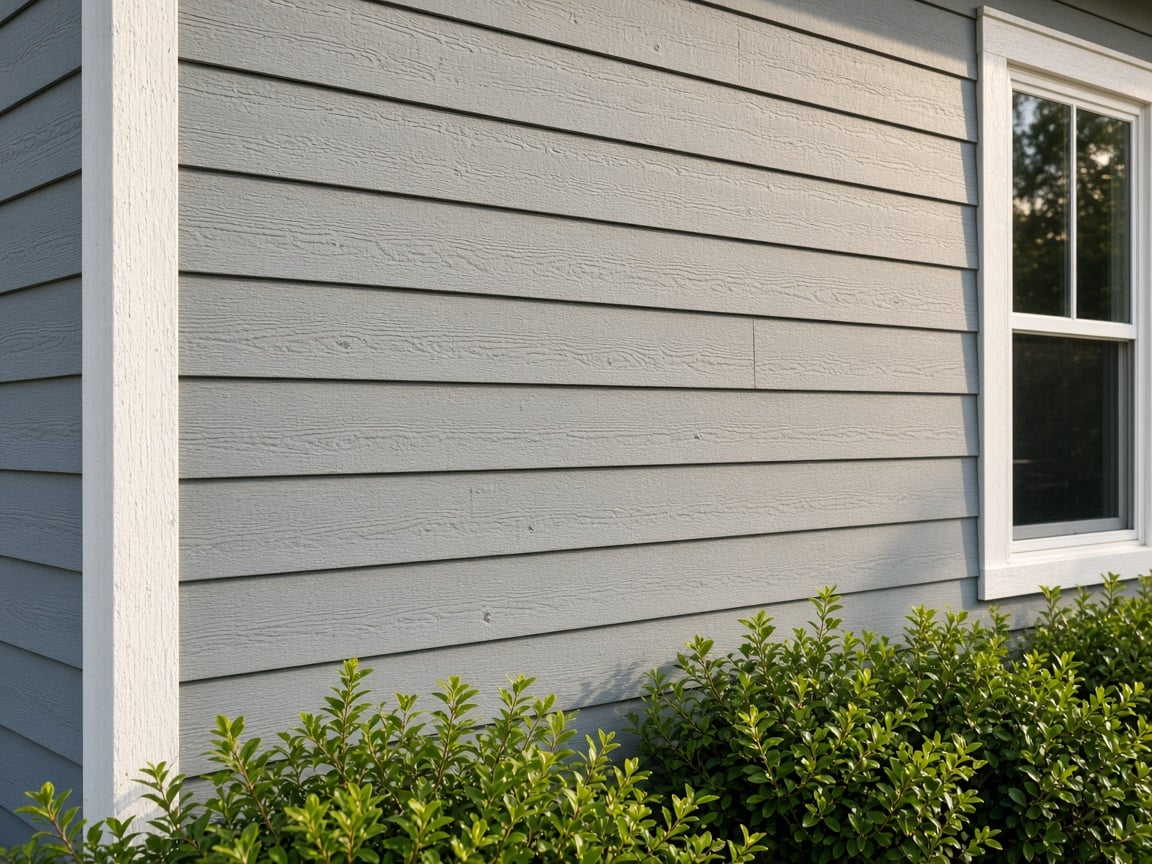
What is the real difference between the two materials?
Traditional wood siding is solid lumber, usually pine, cedar or another softwood, milled into lap boards, shiplap or board-and-batten. It moves with humidity, takes paint or stain, and can be cut with ordinary carpentry tools.
Fiber cement is a composite. OSHA’s fact sheet on cutting fiber-cement board describes it as cement, sand and cellulose fibers. It is sold as planks, panels and shingles, and is often sold factory-primed so it can be painted on site. Because it is mostly cement, it does not feed decay fungi the way wet wood does. That does not make the wall behind it waterproof. Water that gets past any siding still has to be stopped by the weather-resistive barrier and flashing.
How does each one handle Austin’s rain and heat?
The National Weather Service Austin climate summary describes heavy rain that can arrive in short bursts, with large hail and strong wind as the most common severe weather. Long, hot summers follow. Siding here gets soaked quickly and then baked dry, over and over.
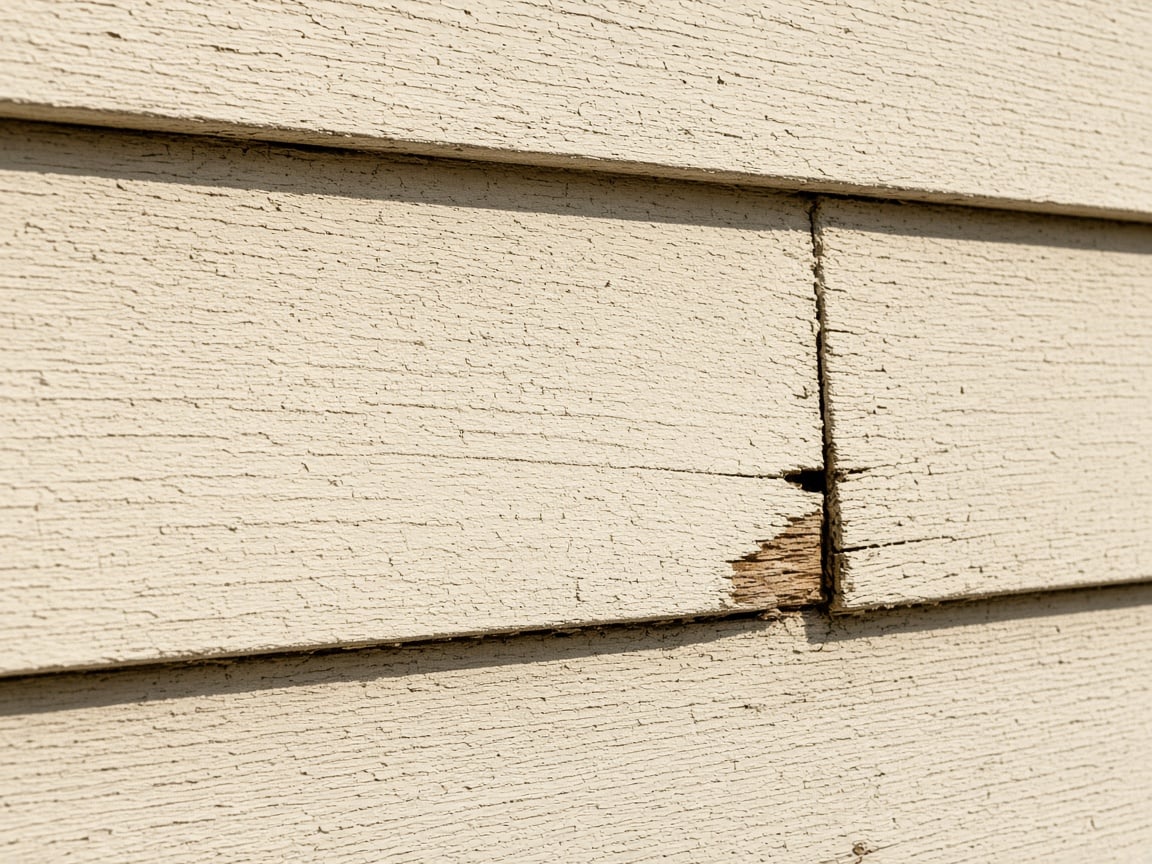
For wood, the weak point is the end grain. The USDA Forest Products Laboratory’s Wood Handbook chapter on finishing says end grain soaks up moisture much faster than the face of the board, and that finishes generally fail there first. The same chapter notes that paint lasts longer on vertical-grain (edge-grain) boards than on flat-grain boards. A later Forest Products Laboratory paper on painted wood siding adds that sealing end grain and back-priming help most on houses with short roof overhangs and siding installed tight to the wall.
For fiber cement, the weak points are cut edges and clearances. James Hardie’s HardiePlank installation instructions say to caulk, paint or prime every field-cut edge and spell out gaps from the ground, roofs and flashing. An installer who skips those details gives water an easy path into the board edges.
Does Austin’s wildfire code limit your siding choice?
It can. The City of Austin enforces a Wildland-Urban Interface Code for properties near large areas of undeveloped land. The city sorts lots into proximity zones based on distance from that wildland. In Zone A (within 50 feet) and Zone B (50 to 150 feet), exterior walls must use ignition-resistant or other approved facing materials, and Zone A also calls for 6 inches of noncombustible flashing where walls meet the ground, a deck or a roof.
Two points on that page matter for a siding job. First, the city provides an interactive map to look up a lot’s zone. Second, the page says that even when a project does not need a permit, the work still has to follow the WUI rules. Ordinary untreated wood boards are not on the code’s list of wall options; fire-retardant-treated wood labeled for exterior use is. If you are in either zone, ask for the fire-test listing on the exact product you are buying rather than assuming a material category qualifies.
Do you need a permit to replace siding in Austin?
It depends on how much you replace. The City of Austin’s list of work exempt from building permits includes residential siding that does not exceed 128 square feet and is not part of a fire-resistance-rated assembly. Replacing wood fascia, trim and soffits is also on the exempt list, and painting counts as finish work.
So swapping a few rotted boards on one wall is usually permit-free, while re-siding a whole elevation or the full house is not. If you are switching from wood to fiber cement across the house, plan on a permit and an inspection.
What does painting and upkeep look like for each?
Primed fiber cement has a deadline. The HardiePlank instructions say factory-primed products must be painted within 180 days of installation, recommend 100% acrylic topcoats, and say not to use stain or oil-based paint. If you want a stained wood look, fiber cement is the wrong product.
Wood has a tighter window. The Wood Handbook says paint bonds much better when the wood is painted within about a week of installation, weather permitting, and recommends a paintable water-repellent preservative followed by primer before the topcoats. After that, wood needs closer attention: checking caulk at butt joints, keeping sprinklers off the bottom course, and repainting before bare wood shows. Our painting service covers that finish work.
What should you ask about installation day?
Cutting fiber cement makes fine dust that contains crystalline silica. OSHA’s silica rule for construction lets crews cut fiber-cement board without a respirator only when the work is done outdoors with a handheld saw (blade of 8 inches or less) connected to a dust collection system with a high-efficiency filter. Indoor cutting or bigger blades require more controls. Ask how cuts will be made, where the cutting station will sit, and how dust will be cleaned up, especially if kids, pets or a vegetable garden are nearby.
Wood cutting is simpler, but the boards should be stored off the ground, kept dry and primed on cut ends before they go up.
When is sticking with wood the simpler answer?
If the siding is mostly sound and only a few boards are soft, matching the existing wood is usually faster, needs no permit under the 128-square-foot limit, and keeps the wall looking uniform. Mixing materials on one elevation can show once painted, because profiles and textures differ. A full switch to fiber cement makes more sense when rot keeps coming back across several walls, when you are already replacing the barrier and flashing, or when a WUI zone narrows your choices. Our siding page explains what we check under the boards, and exterior remodeling covers planning siding together with roof, gutter and paint work.
Ridgepoint Solutions looks at the wall behind the siding before recommending a material. Get a free estimate or email info@ridgepoint-solutions.com with photos of the problem areas.
Frequently asked questions
Can fiber cement siding be stained instead of painted?
No, not under the HardiePlank installation instructions. They say not to use stain, oil or alkyd-based paint, or powder coating on the product, and they recommend 100% acrylic topcoats. Factory-primed boards must also be painted within 180 days of installation. If you want a natural stained-wood look, real wood siding or a different product line made for that finish is the better route. Ask for the written finishing instructions for any product before you choose a color plan.
Can I replace a few rotted wood boards with fiber cement?
You can, but it is rarely the best fix. Fiber cement planks do not always match the thickness, profile or reveal of older wood siding, so the patch tends to show after painting. Small repairs of 128 square feet or less are usually exempt from a City of Austin permit if the wall is not fire-rated. For a few boards, matching wood is often simpler. Save the material switch for a full wall or full house.
How do I find out if my home is in Austin’s wildfire zone?
The City of Austin’s Wildland-Urban Interface Code page links to an interactive map that shows a property’s proximity zone. If the map puts you in Zone A or B, the city says to confirm on site by measuring to the nearest wildland. The rules apply to properties inside the City of Austin’s full-purpose and limited-purpose areas. Check this before buying siding, because the zone decides which wall materials are allowed.