
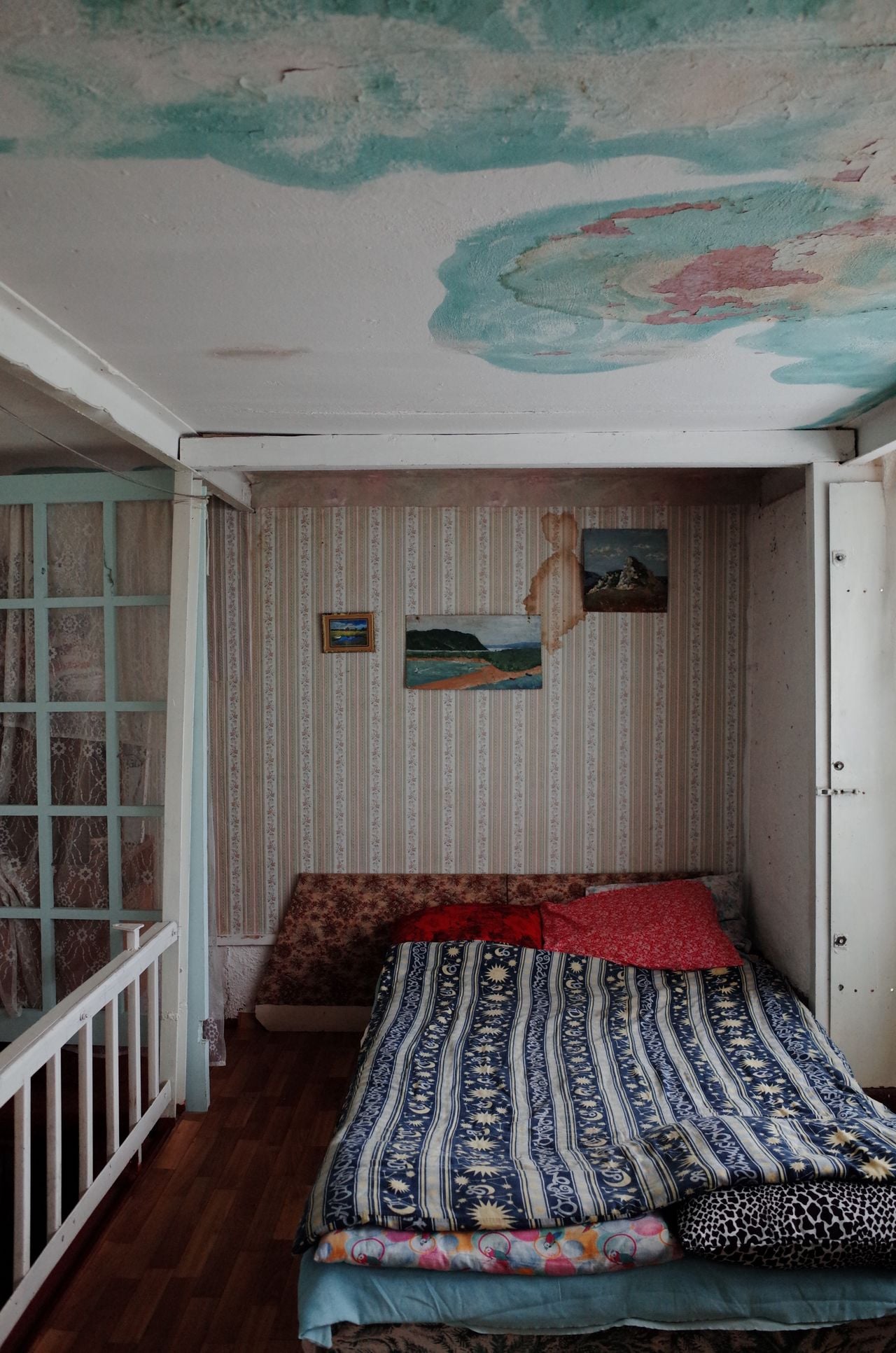
A brown or yellow ceiling stain means water reached the drywall — usually from a roof, plumbing, or HVAC line above. In Austin and surrounding Central Texas communities, the useful order is the same every time: stop the source, dry the area within a day or two, remove material that stayed wet or swelled, then patch, texture, prime and paint. Painting over an active or still-damp stain only hides the mark until the next rain or drip.
What should you do first when you see a ceiling stain?
Protect the room, then find whether water is still arriving. Put a bucket under active drips. Move furniture and rugs out of the way. If the drywall is soft, bulging or ready to fall, keep people clear of that spot until the wet section is cut out.
Trace the source before you open a big hole. Common paths include a failed roof penetration (pipe boots, flashing), overflowing gutters that push water under the eaves, a bathroom leak on the floor above, or a sweating or leaking HVAC line in the attic. Ridgepoint Solutions’ interior repairs page puts the same rule first: fix the roof or other leak before the ceiling finish, or the stain will return.
Photograph the stain, the attic or chase above it if you can safely reach it, and any wet insulation. The Texas Department of Insurance water damage and mold tip page advises stopping the leak, starting to dry promptly, listing and photographing damage before permanent repairs, and making only temporary protective fixes (such as a tarp) until the insurer has seen the damage when a claim is involved. That is documentation advice, not a promise about what any policy will pay.
How soon do you need to dry the area?
The U.S. EPA’s brief mold and moisture guide says to dry water-damaged areas and items within 24 to 48 hours to help prevent mold growth. Moisture control comes before cosmetics: fix the water problem, then clean or remove damaged material.
EPA Table 1 guidance for clean-water damage is specific about gypsum board: drywall may be dried in place if there is no obvious swelling and the seams are intact; otherwise remove, discard and replace it, and ventilate the cavity when you can. Wet insulation should come out rather than being painted over. Those steps are for clean water. If the water was sewage or otherwise contaminated, the same EPA materials say to bring in someone experienced with that cleanup.
Central Texas humidity works against quick drying. The National Weather Service Austin climate summary describes a humid subtropical pattern with Gulf moisture and thunderstorms that can drop large amounts of rain in short periods. After a storm leak, expect damp attic air and overnight moisture; fans, open windows when outdoor air is drier, and a dehumidifier help more here than waiting for the stain to “just dry.”
Can you paint over a water stain?
Stain-blocking primer can hide a mark on dry, sound drywall. It does not fix a leak above the ceiling, wet insulation, or board that has already swelled. If the surface is still damp, soft, or the stain grows after every rain, skip the paint can and open the area.
A practical check: press gently on the stain. Soft or crumbly board means cut it back to solid edges. Look in the attic for damp batts, darkened decking or a drip trail to a flashing or pipe. Only after the source is stopped and the cavity is dry should you move to patching and painting.
Does ceiling drywall repair need a permit in Austin?
For one- and two-family homes and townhouses not more than three stories, the City of Austin’s work exempt from building permits list includes a gypsum board repair that does not exceed 128 square feet and is not part of a fire-resistance-rated assembly, a shear-wall assembly, or a tub and shower surround. Painting and similar finish work are listed separately as exempt. Exempt work must still comply with applicable codes and ordinances.
When the drywall repair itself is larger than 128 square feet on a covered residential house, the City’s Express Permits page lists “Drywall – repair only” (repair in excess of 128 sq. ft.) among Residential Express (minor repairs) projects. Most of those permits are described as issuing in about one business day, with longer times possible in a floodplain or historic district. The same page also lists interior non-structural exploratory work — removing drywall or insulation only to observe or evaluate structure — as an Express path when you need to open more area to find the leak path.
If the job turns into moving walls, adding fixtures or other remodel scope, you leave the simple repair track. Check the City pages for your exact work before you cut large sections.
When can you handle the ceiling yourself — and when should you call a contractor?
You may be able to handle a small, dry, inactive stain yourself when:
- The leak is confirmed stopped and the board is hard, with intact seams.
- The stained area is small, and you only need stain-blocking primer and paint.
- You are comfortable with a moisture meter or a clear dry-vs-damp comparison to an undamaged spot.
- No mold smell, no soft sagging, and no contaminated water was involved.
Call a contractor when the board sags or feels soft, insulation is soaked, the stain keeps growing, mold is visible or you smell musty air over a larger area, you cannot safely reach the attic source, or the repair will exceed a small patch. The EPA guide notes that mold covering more than about 10 square feet usually calls for the more detailed remediation guidance — and sewage or contaminated water is not a DIY category. Matching popcorn or heavy texture across a wide ceiling is also hard to blend without practice; Ridgepoint’s interior repairs process is cut-out, dry, replace, tape, mud, texture-match, then prime and paint.
For storm-driven roof leaks that left interior damage, related pages on roof repair and storm damage explain the exterior side of the same job. The ceiling finish should wait until that side is sealed.
Need a ceiling repair after a leak?
Ridgepoint Solutions handles interior repairs for homes in Austin and surrounding Central Texas communities — including water-stained ceilings, wet drywall and insulation removal, texture matching and finish paint after the leak is stopped. Get a free estimate for a walk-through of the stained area and the space above it, or email info@ridgepoint-solutions.com with clear photos of the ceiling and attic if you can take them safely.
Frequently asked questions
Why did a ceiling stain appear when the roof looks fine from the yard?
Water often enters at a small flashing, pipe boot or valley detail that is hard to see from the ground, or from a plumbing or HVAC line in the attic. A dry roof surface on a sunny day does not prove the path is sealed. Check the attic for drip trails and wet insulation, and watch whether the stain expands after the next rain before you assume the exterior is solid.
How long does a ceiling drywall repair take once the leak is fixed?
The cut-out and new board can be quick; joint compound and primer need drying time between coats, and humidity in Central Texas can stretch those waits. Plan for several work sessions rather than a same-day paint finish on a fresh patch. Rushing paint onto damp mud or damp framing is a common reason patches telegraph later.
Will insurance cover a ceiling water stain?
Coverage depends on your policy and whether the damage was sudden and accidental or from a gradual leak. The Texas Department of Insurance explains that many policies cover sudden water damage but often exclude gradual seepage, and it recommends prompt notice, photos before permanent repairs, and temporary protection only until the adjuster has seen the damage. Ask your insurer or agent about your specific policy rather than assuming any repair is covered.