Roofing · Ridgepoint Solutions
Storm damage roof repair in Austin, TX
After a storm: make sure people are safe, document the damage before you move anything, limit further damage, and then call for an inspection. This page covers those first steps for wind, falling limbs and water coming in. Hail has its own page, and so does the insurance process.
The first hour: safety
- Stay off the roof and away from downed power lines. Treat any wet or sagging area as a hazard.
- If a limb has gone through the roof or ceiling, keep people out of that room.
- If you smell gas or see sparks, leave and call emergency services.
Document before you move anything
Take photos and video of the damage from the ground, the attic and the rooms below, before cleanup. Include wide shots and close-ups, with the date. The Texas Department of Insurance advises homeowners to photograph damage and to keep receipts for any emergency repairs.
- Photograph damaged shingles, panels or tile, and any debris on the roof
- Photograph ceilings, walls and floors where water came in
- Keep the pieces of anything that broke off, if it is safe to do so
- Write down the time of the storm
Limit further damage
Temporary protection, such as a tarp over an opening, is meant to keep more water out until the permanent repair. It is a stopgap, not a fix, and it should be done safely. Keep receipts for emergency materials. Call us and we will talk through what is sensible for your roof.
Wind, limbs and water: what we look for
| Cause | Typical damage we check for |
|---|---|
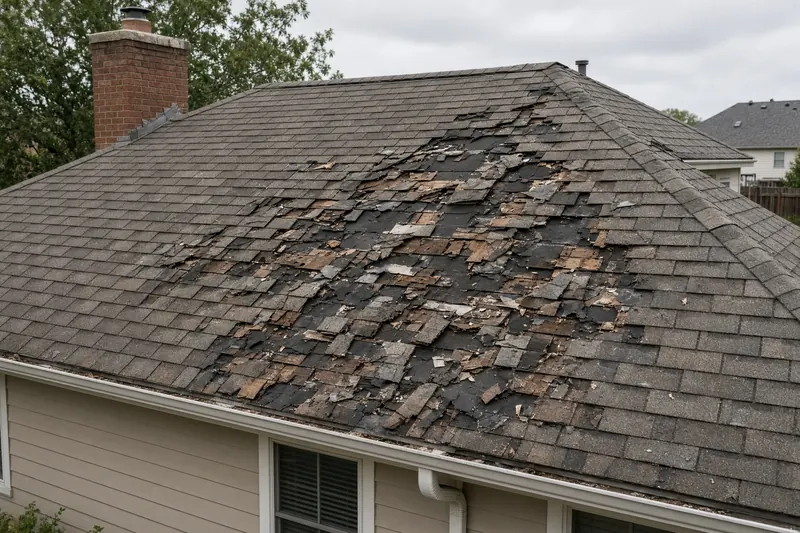
| High wind | Lifted or missing shingles, creased tabs, displaced ridge caps, blown-off panels, loosened flashing |
| Falling limbs and debris | Punctures, cracked decking, crushed edges, damaged gutters and fascia |
| Water intrusion | Wet insulation, stained ceilings, soft deck, damp rafters |
Repair or replace after a storm
Some storm damage is a handful of shingles and a repair does the job. Other damage runs across whole slopes and calls for a replacement. We inspect, show you the damage in photos, and price both if both make sense. Water that reached the ceiling may also need interior repairs.
Where to go next
- Hail was involved: read how hail damage is diagnosed
- You are filing or considering an insurance claim: read how the insurance process works
- You want a baseline check with no storm: see roof inspections
Questions people ask
Should I call my insurance company or a roofer first?
Either order works, but photograph the damage first and do not make permanent repairs before the insurance company has seen it. The Texas Department of Insurance advises making only temporary repairs until the adjuster has looked at the damage.
Can I tarp the roof myself?
We do not recommend it. Wet roofs are slippery and falls are serious. If you cannot reach a professional, keep your belongings dry from inside and stay off the roof.
Does a storm always mean I need a new roof?
No. Many storms cause repairable damage. An inspection with photos tells you which one you have.
How soon should I get the roof inspected?
As soon as it is safe. Water that gets in keeps causing damage, and many insurance policies have deadlines for reporting a claim.
Related services
- Hail damageHow hail damage is diagnosed on each roof material, and what the local record shows.Read more ›
- Insurance restorationThe claim process in plain language, and exactly what Ridgepoint does inside it.Read more ›
- Roof repairLeak tracing and spot repairs, plus the repair-or-replace decision guide.Read more ›
- Interior repairsAfter the leak: drywall, ceilings, texture and paint, on the same job as the roof.Read more ›
Where we work
We serve Austin and ten surrounding Central Texas cities, including Austin, Round Rock, Georgetown. Each city page has that city's permit rules and weather records. See all 11 service areas ›
Photos and write-ups of our work will appear on the projects page.
Our promise
Ridgepoint Workmanship Guarantee
A 10-year workmanship warranty on full roof replacements, and up to 1 year on repairs.
- 10-year workmanship warranty on full roof replacements.
- Up to 1 year of workmanship coverage on repairs.
- This warranty covers our workmanship. Manufacturer or material warranties are separate and not part of it.
Get your free estimate
Free inspection and written estimate. Use the form, or call (737) 418-8832.
Request my estimate