
Gutters only protect a foundation if the water leaves the downspout and keeps moving away from the house. In Austin that means sending it several feet out onto ground that slopes away, never letting it pool against the slab, and never pushing it onto a neighbor’s lot. The City’s Residential Code asks for at least 6 inches of fall in the first 10 feet from the foundation, and on our shrink-swell clay, steady soil moisture matters as much as the gutters do.
Here is how to check your own downspouts, what the fixes look like, and when the job is simple enough to do yourself.
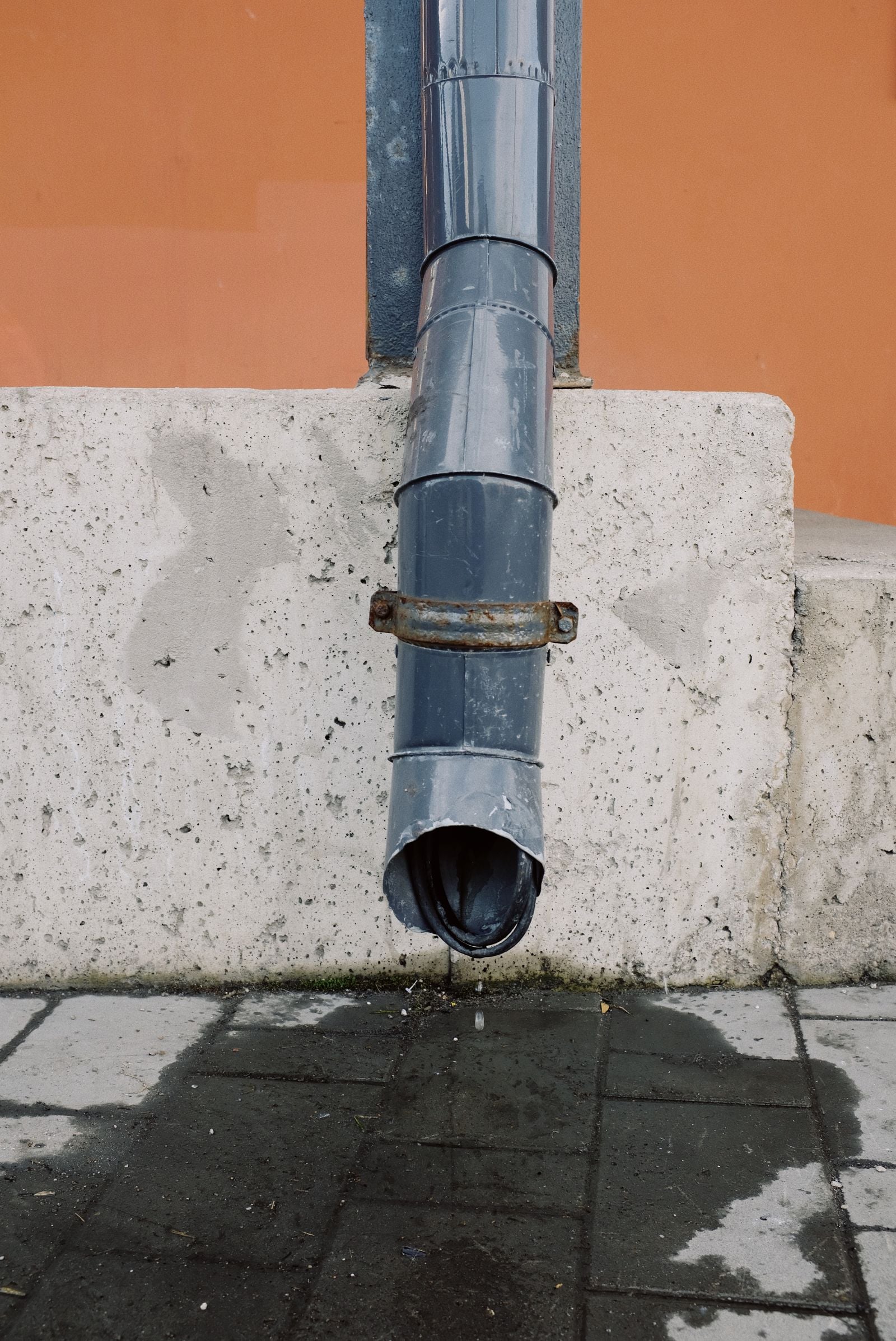
Why does downspout water matter so much on Austin clay?
If your lot sits on expansive clay, this matters. The Texas Department of Licensing and Regulation’s technical bulletin on expansive soils explains that these soils swell when they get wet and shrink when they dry out, and that water should drain away from the house on all sides. You can look up the soil under your own lot on the USDA’s Web Soil Survey.
The trouble is uneven moisture. A handout from the Texas A&M AgriLife Research and Extension Center at Dallas describes dry clay shrinking so the foundation settles, sometimes in different directions, and wet clay swelling and lifting it again. A downspout that dumps a whole roof section into one corner keeps that corner soaked while the rest of the slab dries. The handout lists sticking doors and cracks at wall corners as signs.
Austin rain makes it worse. The City’s flood safety page says Austin lies in the heart of Flash Flood Alley. When a storm drops a lot of water in a short time, every downspout becomes a small creek.
How far from the foundation should gutters drain?
Start with the ground, not the pipe. The Austin Residential Code (the 2024 International Residential Code, adopted with local amendments that took effect July 10, 2025, per the City’s building technical codes page) says in section R401.3 that lots are graded so surface water drains away from foundation walls, with at least 6 inches of fall in the first 10 feet. Where a lot line, wall or slope makes that impossible, drains or swales carry the water away instead. Patios, walks and other hard surfaces within 10 feet of the foundation slope at least 2 percent away from the building.
So the practical answer: the downspout should release water where the ground is already falling away, and the water should be able to keep going. A few feet of extension onto good grade beats a long pipe that empties into a low spot next to the slab. Walk the house in a hard rain once. If water sits against the foundation or runs back toward it, the grade or the outlet needs work.
What are the options for moving the water?
From simplest to most involved:
- Splash blocks. A pad under the outlet that spreads the stream. Fine where the ground already drops away.
- Downspout extensions. Rigid or flexible sections that carry water past the beds. Easy to try, though they get kicked loose.
- Underground drain lines. A solid pipe from the downspout to an outlet farther downhill, often a pop-up emitter in the lawn. Neat and out of sight, but it needs real fall the whole way, a cleanout or easy access, and an outlet that actually sits lower than the inlet.
- Swales and regrading. Reshaping the yard so water has a path. This fixes the cause instead of the symptom, and it is what the code points to when a lot is tight.
- Rain barrels or cisterns. These capture part of the runoff for the garden. Austin Water lists a rainwater harvesting rebate on its rebates and programs page. A barrel fills fast in a big storm, so it still needs an overflow pointed away from the house.
Whatever you pick, clean gutters come first. If they overflow at the front edge, the downspout never gets the water. Our post on why gutters overflow and how fascia rot starts covers that side.
Can I send gutter water toward the street or my neighbor?
Toward the street or an approved collection point, yes, if the ground takes it there without creating a hazard. Onto a neighbor’s lot is where people get into trouble. Texas Water Code section 11.086 says no person may divert or impound the natural flow of surface water in a way that damages another person’s property by overflow. The Texas State Law Library has a plain-language guide on water damage between neighbors. For a real dispute, talk to an attorney.
Check your plat for a drainage easement too. The City’s drainage easement page says permanent structures generally do not belong in one, and owners must keep it clear and not block the flow or dump yard waste there. If a City inlet or ditch near you is clogged or eroding, you can report the drainage problem through Austin 3-1-1.
What about watering the foundation in a drought?
Drainage handles the wet side. The dry side matters too. The AgriLife handout suggests walking the house and looking for a gap between the soil and the slab. If you see one, the ground needs water. Its tips include a soaker hose or drip line about 8 to 18 inches from the foundation, a backflow preventer on the faucet, and 2 to 4 inches of mulch in the beds, but not piled against the foundation, since that can invite termites.
The goal is even moisture all the way around, not one soaked corner and one dry side.
When is this a simple fix you can do yourself?
Often. If a downspout drops water straight onto the soil next to the slab and the yard slopes away a few feet out, a downspout extension or splash block may be all it takes. Re-seat loose elbows, aim outlets downhill and watch the next rain. No contractor needed.
The City’s list of work exempt from building permits includes flatwork outside the public right-of-way and retaining walls of 4 feet or less (unless they hold back extra load or sit in a flood hazard area). Exempt work still has to meet the code. Call for help when the grade runs toward the house, when water crosses a property line, when buried lines keep backing up, or when gutters overflow in every storm.
Want a second set of eyes? Ridgepoint Solutions serves Austin and surrounding Central Texas communities. Get a free estimate and we will look at your gutters, downspout outlets and the grade around the house, or email info@ridgepoint-solutions.com with photos of each downspout and where its water ends up. You can also read more on our gutter services page.
Frequently asked questions
Is a downspout extension enough to protect my foundation?
Sometimes. If the extension drops water onto ground that keeps falling away from the house, it often solves the problem. If the yard is flat or tilts back toward the slab, the water returns no matter how long the pipe is. In that case the grade, a swale or a drain line to a lower outlet is the real fix. Watch the extension during a heavy rain before deciding.
Should I bury my downspouts in a drain pipe?
Buried lines look tidy and keep walkways clear, but they only work with steady fall from the downspout to an outlet that sits lower, plus a way to clean them out. Leaves and roof grit settle in flat spots and clog the pipe, and then water backs up at the house where you cannot see it. Clean gutters and screened inlets help buried lines last.
Can too much water near the foundation be as bad as too little?
Yes. Expansive clay moves with moisture changes, so the risk is in the extremes and in uneven conditions around the slab. A corner that stays soaked from a downspout while the other sides dry out can move differently from the rest. Aim for drainage that carries storm water away and, in long dry spells, gentle watering a short distance from the foundation.