
For most wood fences and decks, a penetrating stain is the better choice than paint. It soaks into the wood instead of forming a skin on top, so it does not peel when the boards swell and shrink, and it is easier to redo. Wait until new wood takes in water, clean it, let it dry, and stain on a mild, dry day out of direct sun.
Below is what the U.S. Forest Products Laboratory and stain makers say, and how it fits homes in Austin and surrounding Central Texas communities.
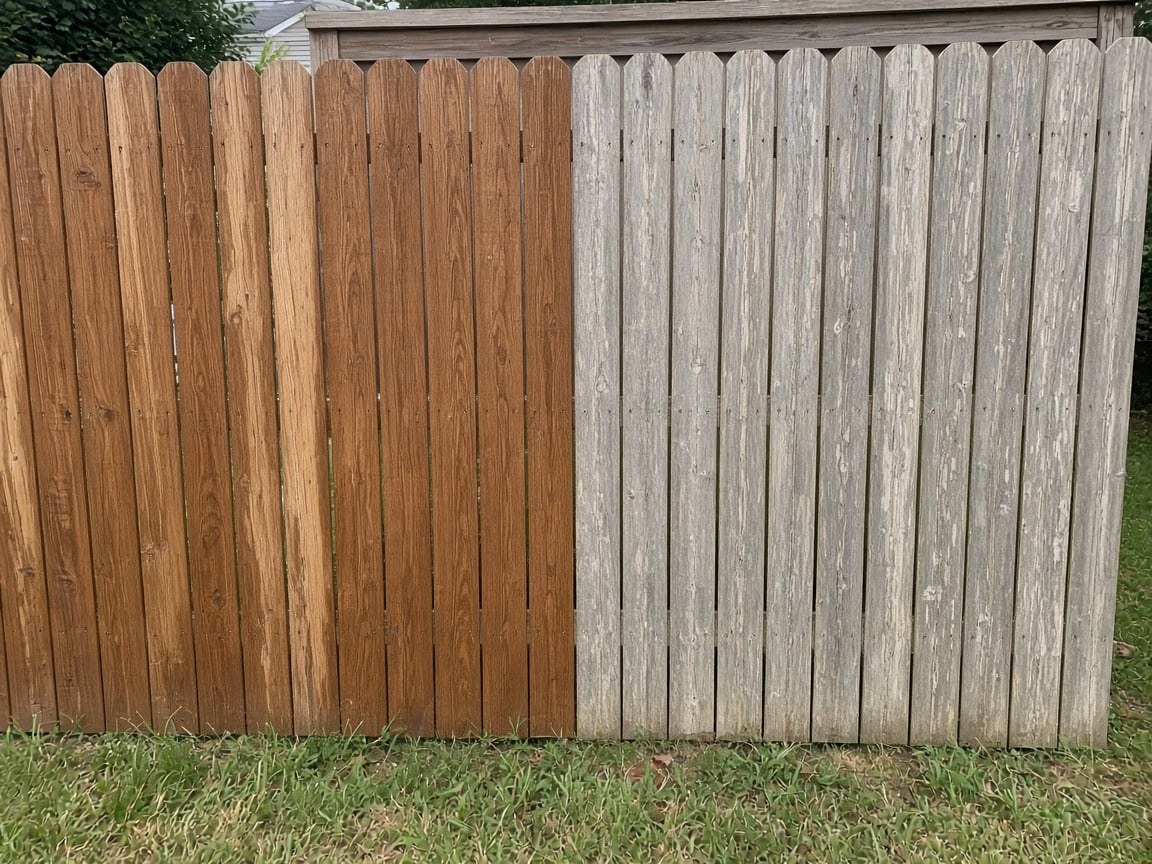
Should you stain or paint a wood fence or deck?
It comes down to how the finish behaves when the wood moves and gets walked on.
The USDA Forest Products Laboratory’s guide to finishes for wood decks sorts exterior finishes into two groups:
- Penetrating finishes: water-repellent preservatives, lightly tinted water repellents and semitransparent stains. The lab says semitransparent stains soak in without forming a continuous layer, so they will not blister or peel even when moisture gets into the wood.
- Film-forming finishes: paint and solid-color stain. The lab says these are prone to trap moisture and fail by peeling, and on a deck they also wear quickly where people walk.
Its conclusion for deck boards is direct: use penetrating finishes, not film-forming ones. Railings are different. They don’t take foot traffic, so the lab says paint or solid-color stain may perform quite well there.
Fences sit in between. A solid-color stain can work on vertical fence boards, and Behr makes one sold for houses and fences. Its product page warns that putting it on too heavily leads to peeling and cracking. If you want the wood grain to show and an easy recoat later, a semitransparent stain is the simpler path.
How long should new wood sit before you stain it?
New pressure-treated lumber is often still wet from treatment, and stain can’t soak into wood that is already full of water.
The Forest Products Laboratory says that if decking came with a factory water repellent, a semitransparent stain may not absorb well, and the wood should weather for 2 to 3 months first. Waiting longer opens the wood more, but the lab warns it can also lead to significant checking. It adds that most decks are retired because of cracks and checks that timely finishing could mostly have avoided.
The treated-lumber guide at Treated Wood suggests a simple test: put a few drops of water on the board. If the water beads up, wait. If the wood soaks it in readily, it is ready for stain. That guide says treated wood is typically ready around 60 days after installation, but drying time depends on sun, heat and recent weather, so test instead of counting days.
How do you prepare an older fence or deck?
Clean it, don’t strip it raw, and let it dry.
- Clean off mildew and dirt. The Forest Products Laboratory says deck cleaners and brighteners remove mildew and dirt so the wood’s color shows again. It also notes that the silver, weathered fibers on old wood absorb stain well and should not be scrubbed away.
- Go easy with the pressure washer. The lab warns that aggressive scrubbing with a caustic cleaner or power washing can remove wood from the surface, especially softer wood such as cedar. Behr’s data sheet for its fence stain says to use the broadest spray pattern and keep the nozzle at least 24 inches from the wood.
- Never mix bleach and ammonia. If you clean mildew with diluted household bleach, the lab cautions against any detergent containing ammonia, because the two react to form a toxic gas. Rinse well.
- Let it dry. The lab recommends at least 2 warm, windy days of drying before finishing. Behr says at least 24 hours for its product.
- Fix the wood first. Replace rotted or split boards before staining. Stain does not repair them.
When is the best time to stain in Austin?
The labels give you the window, and the forecast decides the day.
Behr says its fence stain must go on between 40 and 90 degrees with no rain expected within 24 hours. Sherwin-Williams’ SuperDeck transparent stain data sheet calls for surface temperatures between 50 and 90 degrees, in shade, with no rain expected for 24 hours, and never on damp wood. Both warn against hot surfaces and direct sun, and Sherwin-Williams’ fence staining guide says drying in direct sunlight can cause lap marks.
That matters here. The National Weather Service’s Austin climate summary says normal highs reach 90 degrees in late May and stay above 90 until late September. On summer afternoons, check the temperature of the boards, not just the air. The same summary lists May, October and June as the wettest months and notes that low clouds often form overnight and in the early morning, with fog and drizzle in winter, so let the boards dry before starting. Our post on when to paint a house exterior in Austin covers heat and dew timing in more detail.
Brush, roller or sprayer?
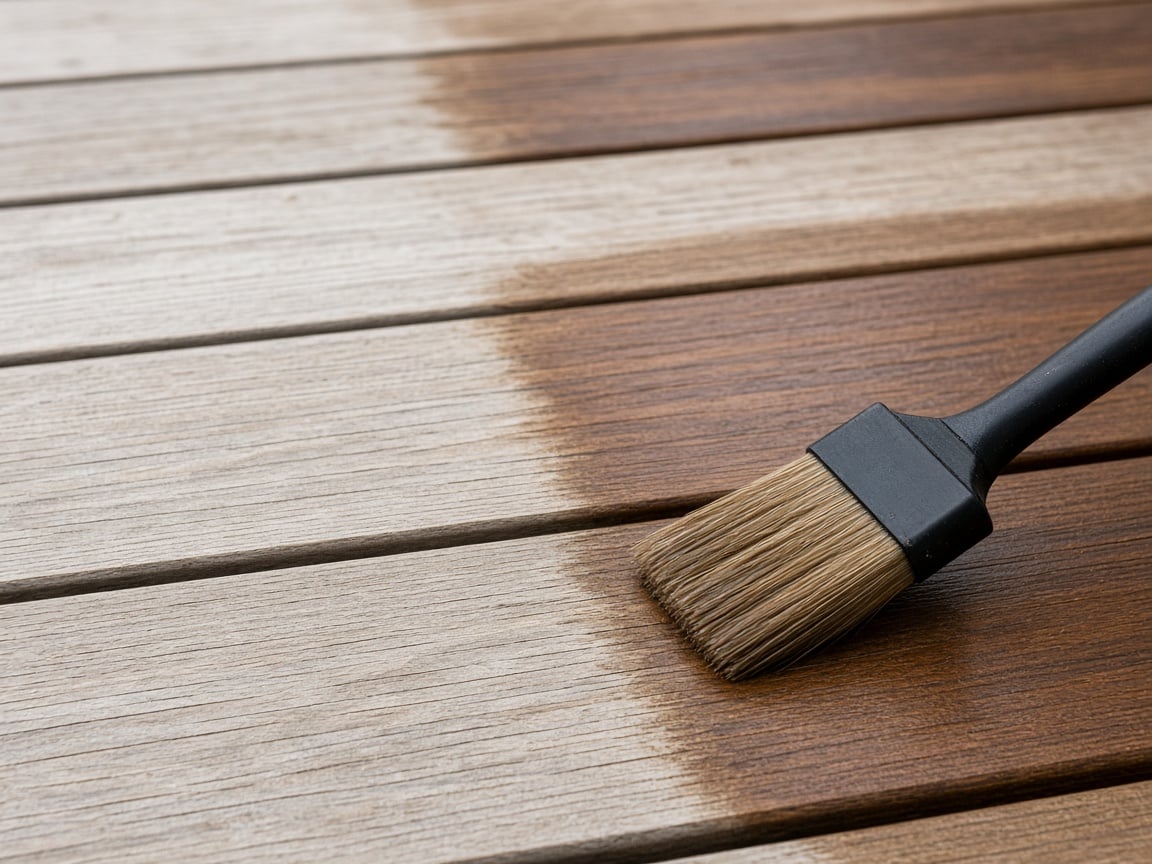
A sprayer is fast on a long fence, but the stain still needs to be worked in. Sherwin-Williams’ fence guide calls a pump sprayer the easiest way to stain a fence, and has you brush the stain in after spraying. Behr says to always back-brush or back-roll, whatever tool you use, and its data sheet says a pump sprayer is not recommended for its solid-color stain, so check your product’s label.
A few rules from the stain makers and the Forest Products Laboratory’s Wood Handbook chapter on finishing prevent the most common problems:
- Stain a few boards at a time and keep a wet edge, so new stain doesn’t overlap dried stain and leave stripes.
- Stain each board end to end.
- Wipe up puddles. Sherwin-Williams says excess stain left on the surface stays tacky.
- Follow the coat count. The SuperDeck transparent stain is one coat only, and Sherwin-Williams says a second coat may not soak in and can stay glossy and tacky.
- Test a small hidden area first to check the color.
Do you need a permit?
Not for the staining. The City of Austin’s list of work exempt from building permits includes painting and similar finish work on one- and two-family homes. It also exempts non-structural deck repairs limited to the existing deck boards, but not guardrails or handrails, and fences no taller than 7 feet. The city notes a permit may still be required if the property is in a floodplain, and exempt work still has to meet city codes.
When to call a contractor
A short fence in good shape is a reasonable weekend job. It makes sense to bring someone in when boards, posts or railings need repair first, when the fence or deck adjoins siding or trim that also needs work, or when you want the fence, deck and house exterior finished on one schedule.
Ridgepoint Solutions handles painting and exterior remodeling for homes in Austin and surrounding Central Texas communities, including the repairs that come before the finish. Get a free estimate or email info@ridgepoint-solutions.com with a few photos of the fence or deck.
Frequently asked questions
How soon after rain can I stain a fence?
Only when the wood is dry all the way through, not just on the surface. Sherwin-Williams says not to apply its deck and fence stain to wet or damp wood, and Behr requires a completely dry surface. The Forest Products Laboratory suggests at least 2 warm, windy days of drying after a deck is washed, which is a fair guide after a soaking rain too. Check shaded boards and the bottoms of pickets near the ground, since they dry last.
Can I stain over old paint or solid stain?
Not with a penetrating stain. Paint and solid-color stain form a film, so a semitransparent stain has nothing to soak into. Sherwin-Williams says its transparent deck stain should not go over sealed or previously coated surfaces. You can recoat with a compatible solid stain or paint, or strip the old coating first. Behr sells a stripper for that and says its wood cleaner must follow it to neutralize the wood before staining.
How do I know when my fence or deck needs restaining?
Use the same water test as on new wood. Sprinkle a few drops on the boards that get the most sun. If the water soaks in quickly and the wood is turning gray, it is time to clean and restain. Sherwin-Williams says its transparent stain should not be recoated until water no longer beads on the surface. The Forest Products Laboratory puts the life of a clear water-repellent finish at about 1 year on exposed deck boards, and pigmented stains last longer.