Roofing · Ridgepoint Solutions
Hail damage to your roof in Austin, TX
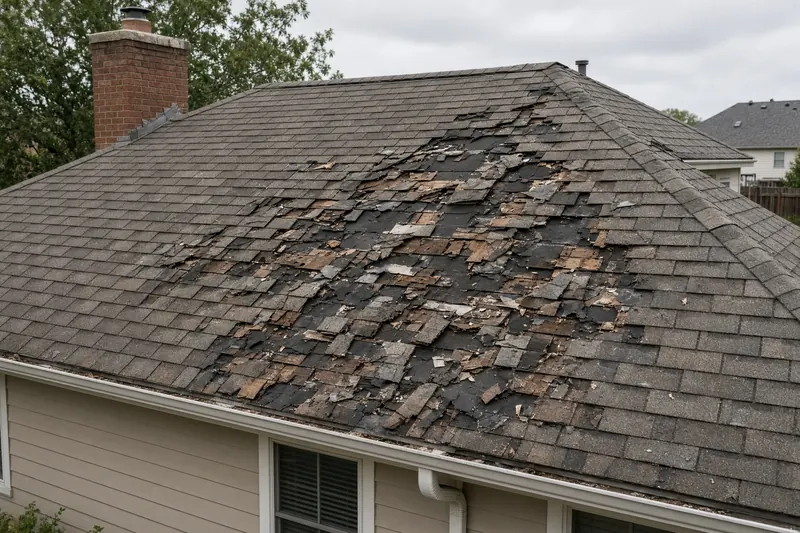
Hail damage is not always visible from the ground. It shows up as bruises and lost granules on shingles, dents and finish damage on metal, and cracks on tile. A hail inspection looks for those signs on every slope and in the soft metals around the roof, and documents them.
What hail damage looks like by material
| Roof material | Signs of hail damage |
|---|---|
| Asphalt shingles | Round bruises you can feel as soft spots, granule loss exposing the mat, cracked or fractured shingles, collateral dents on vents and flashing |
| Metal panels | Dents in the panel, damage to the finish or coating, dented ridge caps and trim; cosmetic dents and functional damage are different things |
| Clay and concrete tile | Cracked or broken tiles, chips, and displaced pieces |
| Single-ply and low-slope membranes | Punctures, bruised or fractured membrane, damaged insulation beneath |
How a hail inspection works
- 1We start at the ground: gutters, downspouts, vents, window screens and fences show hail marks that confirm hail fell on the property.
- 2We examine each roof slope for damage and mark and count what we find.
- 3We photograph the damage in close-up and wide views so it can be understood by someone who was not there.
- 4We check whether the damage is functional (it lets water in or shortens the roof's life) or cosmetic.
- 5You receive a written summary of what we found.
What the record shows for Central Texas
The National Oceanic and Atmospheric Administration (NOAA) keeps the Storm Events Database. For 2016 through 2025 it lists the following hail reports for the four counties where we work. These are reports filed for a county, not a count of storms, and they depend on where spotters were, so they are not a ranking of risk:
| County | Hail reports | 1 inch or larger | Largest report |
|---|---|---|---|
| Travis | 152 | 121 | 3.0 in, Sep 24, 2023 |
| Williamson | 203 | 163 | 4.0 in, Sep 24, 2023 |
| Hays | 63 | 52 | 3.0 in, May 9, 2024 |
| Bastrop | 51 | 39 | 5.5 in, Mar 18, 2018 |
One inch is the size the National Weather Service uses as a threshold for a severe thunderstorm. Each city page adds that city's own records. Source: NOAA National Centers for Environmental Information, Storm Events Database bulk data files, retrieved October 1, 2026.
What to do if you suspect hail
- Photograph anything you can see from the ground, with the date
- Do not wait for a leak; hail damage can be present before water shows up
- Schedule a roof inspection and ask for photos of the damage
- Read how the insurance process works before you decide on a claim
Why the material matters
Impact-resistant shingles, metal, and tile respond to hail differently, which matters when you replace. See shingle roofing and metal roofing for the tradeoffs. For the first steps after wind or a leak, see storm damage.
Questions people ask
How big does hail have to be to damage a roof?
There is no single size. Damage depends on the hail's size and hardness, wind speed, and the age and material of the roof. Roofs that are old and brittle can be damaged by smaller hail than newer ones.
Can I see hail damage from the ground?
Sometimes you can see dented gutters, vents and fences, which suggests hail fell, but roof damage often requires a closer look on the roof.
Are dents in a metal roof a problem?
Some dents are only cosmetic and some damage the coating or seams. We document which is which. Whether cosmetic damage is covered depends on your policy.
How long after a storm can I get an inspection?
Soon is better. Evidence stays on the roof, but weather and later storms can confuse what happened when. Insurance policies also have reporting deadlines.
Related services
- Storm damageThe first 48 hours after wind, limbs or water intrusion.Read more ›
- Insurance restorationThe claim process in plain language, and exactly what Ridgepoint does inside it.Read more ›
- Roof inspectionsWhat we check, when to schedule it, and what you get in writing.Read more ›
- Metal roofingMetal systems compared: standing seam, exposed-fastener and stone-coated steel.Read more ›
- Shingle roofingThe material: architectural vs 3-tab, impact resistance, wind ratings and color.Read more ›
Where we work
We serve Austin and ten surrounding Central Texas cities, including Austin, Round Rock, Georgetown. Each city page has that city's permit rules and weather records. See all 11 service areas ›
Photos and write-ups of our work will appear on the projects page.
Our promise
Ridgepoint Workmanship Guarantee
A 10-year workmanship warranty on full roof replacements, and up to 1 year on repairs.
- 10-year workmanship warranty on full roof replacements.
- Up to 1 year of workmanship coverage on repairs.
- This warranty covers our workmanship. Manufacturer or material warranties are separate and not part of it.
Get your free estimate
Free inspection and written estimate. Use the form, or call (737) 418-8832.
Request my estimate