Commercial · Ridgepoint Solutions
Modified bitumen roofing in Austin, TX
Modified bitumen (mod-bit) is a low-slope roofing system made of asphalt sheets reinforced with fabric and modified with polymers, installed in layers. It has a long track record on flat roofs and is a good fit where foot traffic or rooftop equipment is heavy. Ridgepoint installs it on commercial roofs and on residential low-slope areas.
How it is built
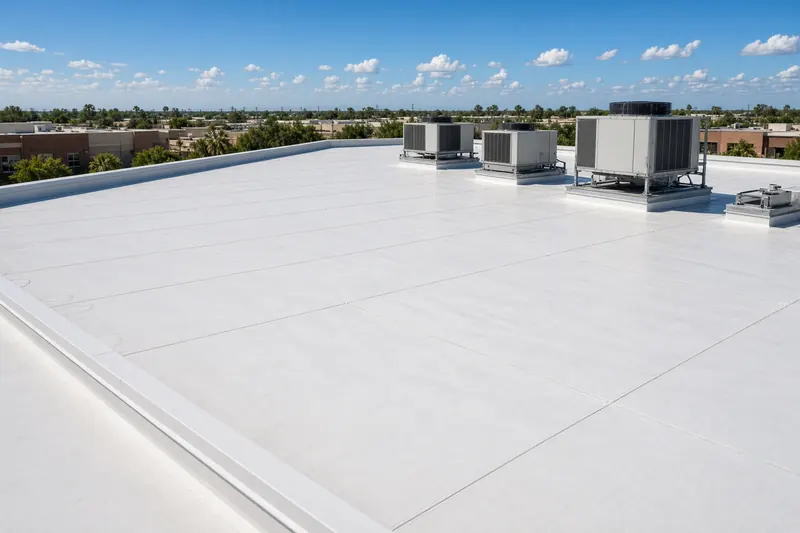
A modified bitumen roof is usually two layers: a base sheet and a cap sheet, installed over insulation or a cover board. The sheets are asphalt reinforced with polyester or fiberglass and modified with polymers to make them more flexible and durable.
- SBS (styrene-butadiene-styrene) modified sheets are rubber-like and flexible
- APP (atactic polypropylene) modified sheets are plastic-like and more resistant to heat
- The cap sheet carries mineral granules that protect against UV and can be white or light colored
How the sheets are attached
| Method | How it works | Notes |
|---|---|---|
| Torch-applied | A torch heats the underside so the sheet melts onto the base | Open flame; requires strict fire-safety procedure |
| Cold-applied | Adhesive joins the sheets together | No open flame; used where flame is a concern |
| Self-adhered | Peel-and-stick sheets adhere with factory adhesive | No flame, no hot asphalt; temperature-sensitive |
Where mod-bit is a good choice
- Roofs with lots of foot traffic or rooftop equipment service
- Buildings that want a redundant, layered system
- Flat porch roofs, additions and low-slope areas on homes
- Re-roofs where the owner wants a proven system with a long history
Details that matter
As with any flat roof, flashings and seams are where leaks begin. Mod-bit flashings are built with the same layered approach, using base and cap flashing sheets lapped over the field. Drains, scuppers, edge metal and penetrations get the most attention. A roof coating can extend the life of a mod-bit roof that is in good condition.
Mod-bit vs single-ply
Single-ply membranes such as TPO and PVC are lighter and have welded seams. Modified bitumen is heavier and layered. The choice depends on the building, budget and what happens on the roof. The big picture is on the commercial roofing page, and the home side of low-slope work is covered under residential roofing.
Warranty and paying
The manufacturer sets the material warranty; our labor warranty and manufacturer relationships are on the warranty page. For financing options, approval is subject to credit.
Commercial warranty basics, and how manufacturer and labor warranties fit together, are on the warranty page.
Paying over time
Financing options are available through lending partners. Financing is subject to credit approval and approval is not guaranteed. See financing options ›
Questions people ask
What is the difference between SBS and APP?
SBS sheets are rubber-modified and flexible, which suits temperature swings. APP sheets are plastic-modified and more heat-resistant. Both are used on low-slope roofs.
Is torch application safe?
It is safe when done by trained crews with fire-safety procedures. Cold-applied and self-adhered systems avoid an open flame when it is a concern.
How long does mod-bit last?
It depends on the product, installation and maintenance. Ask for the manufacturer's warranty terms for the specific system.
Can mod-bit be recoated?
Often yes. A reflective coating can extend the life of a roof that is in good shape, after an inspection.
Related services
- Commercial roofingRepair, restore or replace: the decisions, the systems, and the warranty path for building owners.Read more ›
- TPO roofingOne membrane in depth: seams, attachment, reflectivity and where TPO roofs fail.Read more ›
- PVC roofingOne membrane in depth: chemical and grease resistance, welded seams and where PVC is the right choice.Read more ›
- Commercial roof repairReactive leak response for owners and property managers, including low-slope repair detail.Read more ›
Where we work
We serve Austin and ten surrounding Central Texas cities, including Austin, Round Rock, Georgetown. Each city page has that city's permit rules and weather records. See all 11 service areas ›
Photos and write-ups of our work will appear on the projects page.
Our promise
Ridgepoint Workmanship Guarantee
A 10-year workmanship warranty on full roof replacements, and up to 1 year on repairs.
- 10-year workmanship warranty on full roof replacements.
- Up to 1 year of workmanship coverage on repairs.
- This warranty covers our workmanship. Manufacturer or material warranties are separate and not part of it.
Get your free estimate
Free inspection and written estimate. Use the form, or call (737) 418-8832.
Request my estimate