If you replace a flat or low-slope roof over a cooled commercial space inside the City of Austin, the new roof surface generally has to be reflective: the City’s Energy Code calls for a three-year-aged solar reflectance of at least 0.55 with a three-year-aged thermal emittance of at least 0.75, or a three-year-aged Solar Reflectance Index (SRI) of at least 64. Small repairs, ballasted roofs and roofs over spaces that aren’t cooled are among the exceptions. Here is how the rule reads and what to ask for on a bid.
What does the City of Austin’s cool roof rule actually say?
Austin enforces the 2024 International Energy Conservation Code with local amendments, effective July 10, 2025. In City Code Chapter 25-12, Article 12, the City replaced the model code’s roof reflectance section with its own version of C402.4. It says low-slope roofs directly above cooled conditioned spaces in Climate Zones 0 through 3 must meet one of the reflectance options in the code table. The same City document lists Austin as Climate Zone 2A, so the rule applies here.
The two options (spelled out in the City’s amendment to the ASHRAE 90.1 compliance path, and matching the model code table) are:
- Option 1: three-year-aged solar reflectance of 0.55 or higher and three-year-aged thermal emittance of 0.75 or higher.
- Option 2: a three-year-aged SRI of 64 or higher.
“Three-year-aged” matters. A white membrane is brightest the day it goes down; the code asks for the value after the product has weathered.
There is also a separate, lighter rule for steeper roofs on commercial buildings. Roof surfaces steeper than 2 in 12 need a material with a reflectance of at least 0.35 or an initial SRI of at least 29.
What do reflectance, emittance and SRI mean in plain terms?
The U.S. Department of Energy’s Guidelines for Selecting Cool Roofs explains the three numbers this way:
- Solar reflectance is how much sunlight the surface bounces back, on a scale of 0 to 1.
- Thermal emittance is how well the surface lets go of the heat it does absorb, also 0 to 1. Bare, shiny metal can reflect a lot of light but still run hot because its emittance is low.
- SRI combines the two into one number. DOE gives the example that a clean black roof could score around 0 and a clean white roof around 100.
You don’t need to calculate anything. The Cool Roof Rating Council’s Rated Products Directory lists initial and three-year-aged values for roofing products, and you can filter it by low-slope products. Keep in mind the directory’s own note: a listing describes how a product performs, but it is not a ranking and does not by itself mean the product meets a particular code.
Which roofs and parts of a roof are exempt?
The City’s C402.4 lists these exceptions:
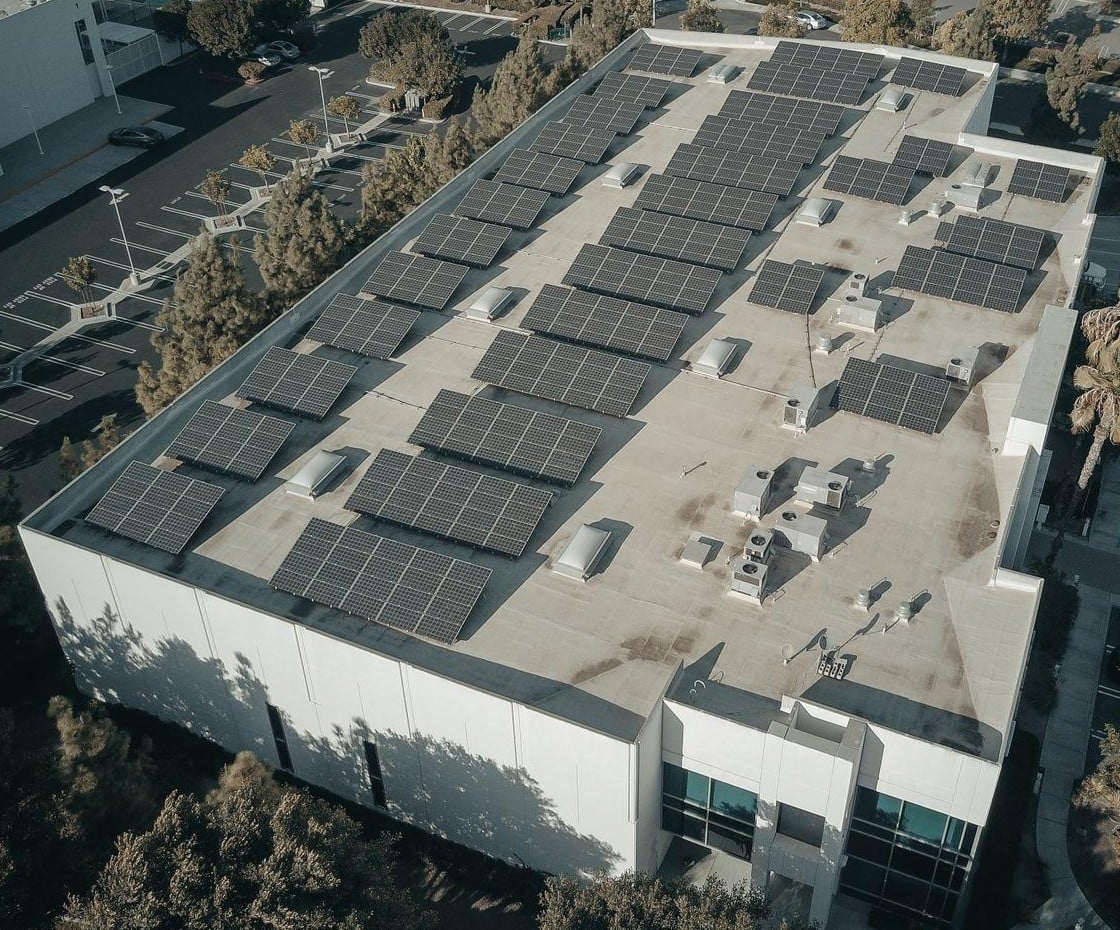
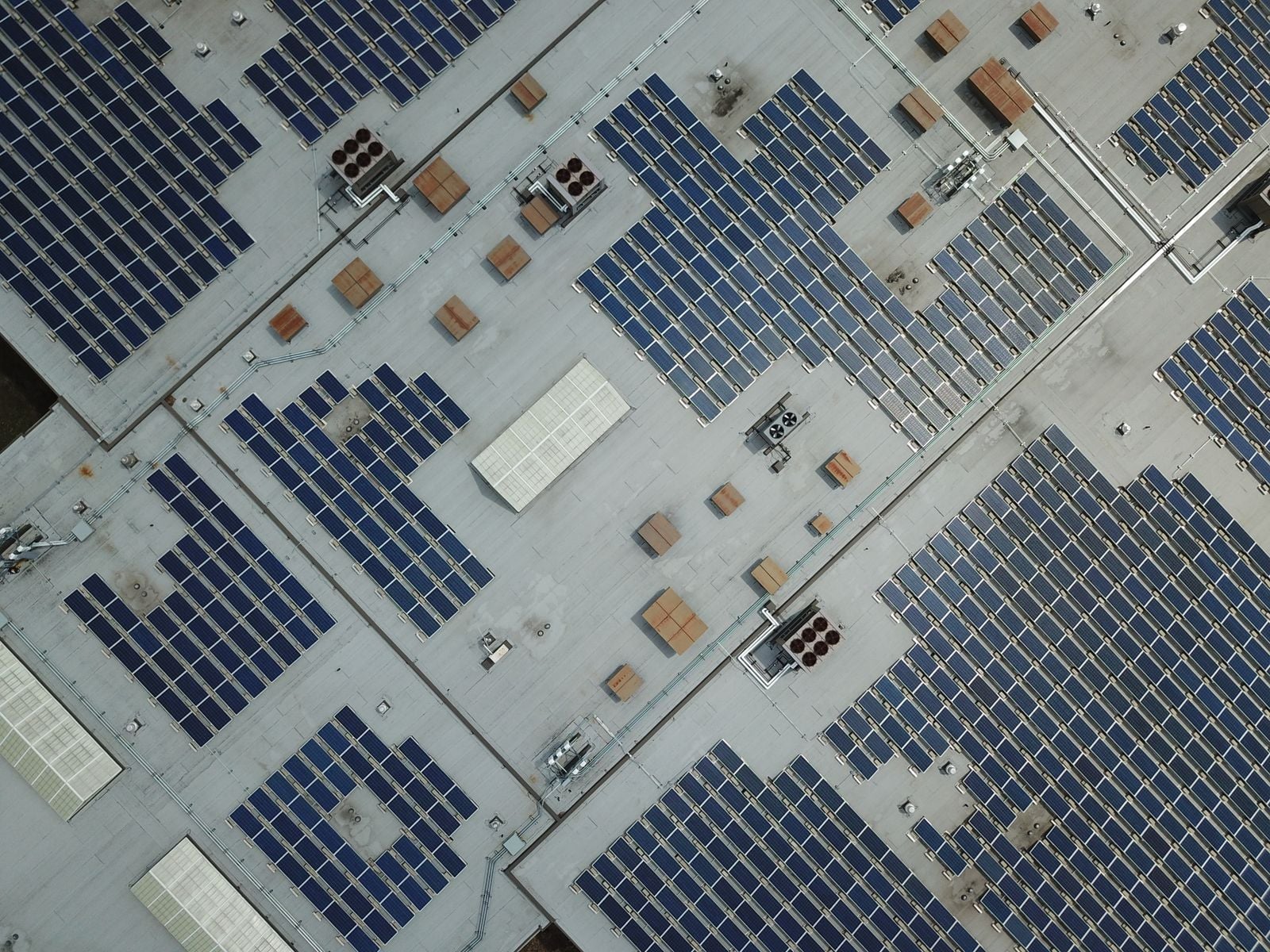
- Covered areas. Portions of the roof under solar panels or solar air or water-heating equipment, vegetated or landscaped roof areas, above-roof decks and walkways, skylights, and HVAC units and other equipment mounted on the roof.
- Repairs. Repairs to the roof surface that don’t exceed the lesser of half the roof surface or 20 squares (2,000 square feet).
- Shaded areas. Portions shaded at the peak sun angle on the summer solstice by permanent parts of the building or a neighboring building.
- Ballasted roofs. Portions covered with pavers of at least 23 psf, or stone ballast of at least 17 pounds per square foot.
- Mostly exempt roofs. A roof where at least 75 percent of the area already falls under one or more of these exceptions.
The rule also only covers roofs directly above cooled space. A roof over a warehouse area that isn’t air-conditioned is a different case. The City’s ASHRAE-path amendment states the same idea directly: roofs over semi-heated spaces, or over conditioned spaces that aren’t cooled, are exempt.
Does a commercial re-roof in Austin need a permit, and what paperwork comes up?
Plan on a permit. The commercial section of the City’s list of work exempt from building permits has no roofing item, and the City notes that even exempt work must still meet the codes. The Commercial Plan Review page lists re-roofing as work that can use the Quick Turnaround application when the project is 5,000 square feet or less, in an office, retail or multi-family building, among other conditions. For a re-roof under that option, the City says you must supply manufacturer specs for IECC compliance.
In practice, that means the product data sheet for the membrane or coating you choose should show its aged reflectance and emittance (or aged SRI). Asking for that sheet with the bid saves a round trip later. Projects that don’t qualify use the City’s other commercial review paths, described on the same page.
Does this mean every flat roof should be white?
Not necessarily. DOE’s Consumer Guide to Cool Roofs puts it plainly: it is rarely economical to replace a mechanically sound roof just to increase its solar reflectance. The better time to choose a cool surface is when you are already building, replacing the roof, or doing an energy retrofit.
A few practical points from DOE’s selection guide:
- Insulation still does its own job. A reflective surface does not replace roof insulation; the two work together.
- Dirt lowers reflectance. In warm, humid places, light roofs can also pick up algae or mold that dulls them. If you clean a roof, follow the manufacturer’s instructions; power washing or harsh chemicals can damage the membrane.
- Several low-slope systems come in cool versions. White single-ply membranes such as TPO and PVC are common low-slope choices. Modified bitumen can use a light-colored cap sheet, and coatings can extend the life of a roof that is still in good condition.
What should you ask a roofer before you sign?
Ask these questions on any low-slope roof bid inside the City of Austin:
- Is the space under this roof cooled, and does any exception apply to part of the roof?
- Which product are you proposing, and what are its three-year-aged reflectance, emittance and SRI values?
- Will the product data sheet be ready for the permit application?
- Is this a repair under the size limit, or a replacement that has to meet the rule?
- Are you checking for wet insulation before a recover? A commercial roof inspection answers that.
If you only have a leak, start with commercial roof repair. For the bigger repair, restore or replace decision, see our commercial roofing overview.
Ridgepoint Solutions works on low-slope roofs for building owners in Austin and surrounding Central Texas communities. Get a free estimate or email info@ridgepoint-solutions.com, and we will walk the roof, document its condition with photos and give you a written scope.
Frequently asked questions
Does Austin’s cool roof rule apply to houses?
The reflectance rule described here sits in the commercial provisions of the City of Austin Energy Code. Homes fall under the residential provisions, which handle roof heat differently, through a radiant barrier section in the City’s amendments. That section treats reflective roofing as one of its exceptions. If you own a home with a low-slope section, ask your roofer which provisions apply to your project before you pick a color.
Do I have to meet the cool roof rule for a small leak repair?
Usually not. The City of Austin’s version of the rule exempts repairs to the roof surface that don’t exceed the lesser of half the roof or 20 squares, which is 2,000 square feet. A typical leak repair at a seam, drain or curb falls well under that. Once the work grows past that size, treat it like a replacement and plan for a product that meets the aged reflectance and emittance values.
Can a dark or gravel roof still comply?
Some can. Roofs with pavers of at least 23 psf, or stone ballast of at least 17 pounds per square foot, are exempt under the City’s rule, and so are areas covered by solar panels, walkways and rooftop equipment. Roofs over spaces that aren’t cooled are also outside the rule. A dark exposed membrane over a cooled office or store, though, would normally need a reflective surface when it is replaced.