
If a tree or a big limb lands on your roof, get people out of the rooms under it, stay clear of any wires, and photograph everything before the wood is moved. Then have a tree company take the weight off the roof and a roofer check the decking and framing. In the City of Austin, a damaged protected tree that’s an imminent hazard can come down before you have a permit, but you still have to document it and file within seven days.
What should I do in the first hour?
Safety first, then the record:
- Clear the rooms below. A limb that broke through decking can drop debris, insulation or water through the ceiling. Keep everyone out of those rooms.
- Look for wires before you go near the tree. Austin Energy’s electrical safety page says to stay at least 35 feet from a downed line, and warns that branches touching a line can become energized. Report a limb pulling a line from the pole or the house to Austin Energy, and don’t try to cut it free yourself.
- Stay off the roof. The City of Austin’s emergency permits page warns that fallen trees and limbs can shift suddenly and unpredictably. A wet roof with a loaded limb on it is no place to stand.
- Photograph from the ground and from inside. Get wide shots of the whole tree, close-ups of where it hit, the attic if you can see it safely, and any ceiling damage below.
Our storm damage page walks through the general first steps after wind and water get in.
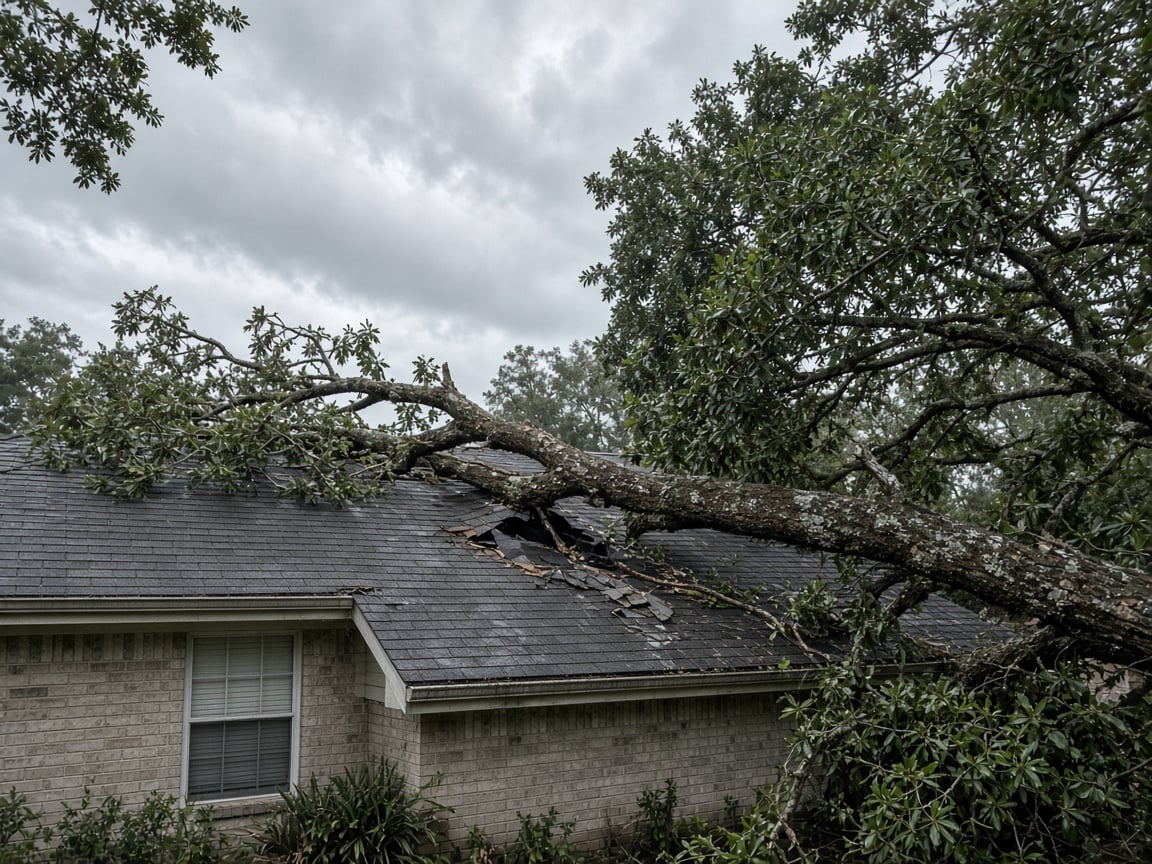
Who owns the problem: the tree, the wire or the roof?
Three separate pieces usually need three different people:
- The tree. The City recommends hiring a tree company to remove a fallen tree. The City Arborist team doesn’t diagnose, prune or remove trees.
- The electric service. Austin Energy’s equipment guide says the utility owns the service drop (the wire running to your house) and the meter. The homeowner is responsible for the anchor that holds that wire to the house, the service entrance cable, the meter base and the panel. If a limb tore the anchor off the fascia, that part of the repair is on the house side.
- The roof and the house. Decking, framing, shingles, gutters, fascia and interior finishes are the roofer’s and repair contractor’s job, once the tree is off.
The order matters. A roofer can’t assess the decking until the weight is lifted, and lifting a limb off a roof is tree-company work.
Do I need a City permit to remove a storm-damaged tree?
It depends on size. On a one- or two-unit home, the City’s dead, diseased and imminent hazard trees page says a tree 19 inches or more in diameter, measured 4.5 feet above the ground, is regulated. To get the diameter, measure around the trunk at 4.5 feet and divide by 3.14.
For a regulated tree that a storm turned into an imminent hazard to people or property, the emergency permits page says it can come down before a permit is issued. The steps are:
- Take photos and record the tree’s diameter and size before work starts. If you can’t measure it, estimate it and take several photos.
- Submit the permit request within seven days of the removal. There’s no fee, but documentation is required.
City Code section 25-8-621 allows the removal without a prior permit if the tree is removed within seven days of being damaged, and lets the City extend that deadline after widespread storm damage. A regulated tree that’s damaged but not an imminent hazard needs an approved permit before it comes down.
What gets damaged under a fallen limb?
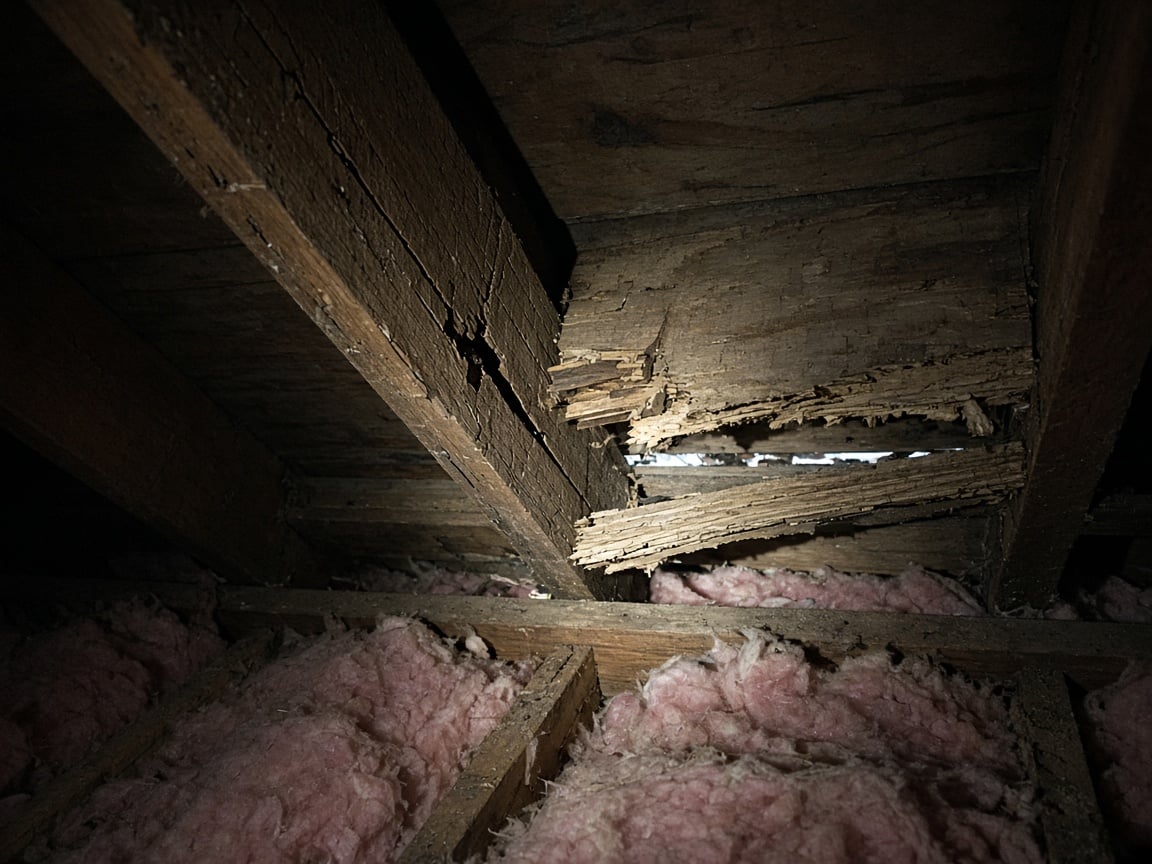
Shingles are only the top layer. Once the tree is off, these are the parts worth checking:
- Decking: cracked or punctured roof sheathing, sometimes wider than the hole you see from the ground
- Framing: cracked, split or pushed-down rafters or truss members in the attic
- Edges: crushed gutters, bent drip edge and broken fascia or soffit
- Penetrations: vents, pipe boots and flashing knocked loose near the impact point
- Inside: wet insulation, stained or sagging ceiling drywall
If water got in, our post on ceiling stains after a leak covers drying out and the order of repairs.
Does the roof repair need a permit?
Small repairs often don’t. The City’s Work Exempt from Building Permits page lists roof decking repair up to 128 square feet, replacing roof covering that doesn’t adversely affect the roof structure, and fascia, trim and soffit repair. Homes in the Wildland-Urban Interface have an extra rule when 50 percent or more of the roofing is replaced. Exempt work still has to meet code.
Broken rafters or trusses aren’t on that list. The emergency permits page also tells homeowners not to remove structural elements unless they’re a professional. Plan on that framing repair being permitted, and ask City of Austin Development Services if you’re not sure.
When can I handle cleanup myself?
Small branches on the lawn, gutters you can clear from a ladder, and debris on the ground are reasonable homeowner work once wires are ruled out. A limb resting on the roof, any break through the decking, or anything near a power line is not. Wait for the tree crew, and then for a roof inspection.
Ridgepoint Solutions handles roof repair, storm damage repair and interior repairs for homes in Austin and surrounding Central Texas communities, and can inspect the decking and framing once the tree is cleared. If hail came with the same storm, see how hail damage is diagnosed.
Had a limb come down on the house? Get a free estimate or email info@ridgepoint-solutions.com with photos of the roof and the attic.
Frequently asked questions
Can I remove a fallen tree from my roof myself?
It isn’t a safe job for most homeowners. The City of Austin warns that fallen trees and limbs can shift suddenly, and recommends hiring a tree company for removal. Cutting a limb that is resting on a roof can move the load onto damaged decking or drop it through the ceiling. If the tree is touching a wire, stay at least 35 feet away and report it to Austin Energy.
What if the tree came from my neighbor’s yard?
Start with safety and photos either way. The City Arborist page calls a neighbor’s limbs crossing the property line a civil matter between the owners, and encourages neighbors to talk and agree on a plan before acting. The City’s tree permit rules still apply based on the tree’s size, so a regulated tree that is an imminent hazard needs the same photos and permit filing within seven days.
How soon should the roof be inspected after the tree is removed?
As soon as the weight is off and the area is safe. Decking and rafter damage under a limb can be wider than the visible hole, and an open roof keeps letting water in. A roofer should check the attic framing, the decking and the edges, and photograph what they find so you have a record before repairs start.